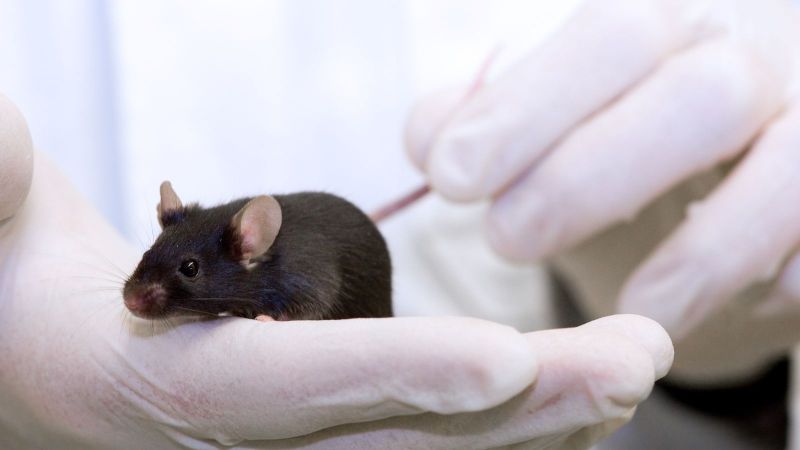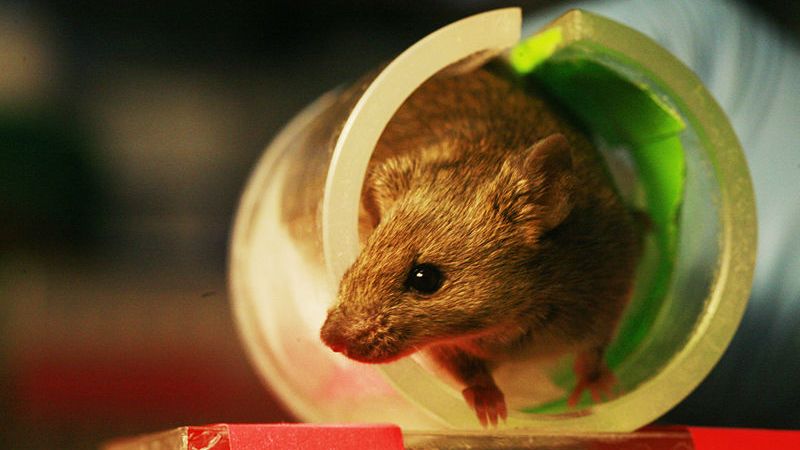

For more than a century, mice have played a central role in advancing medical knowledge. From uncovering the basic rules of genetic inheritance to developing modern cancer immunotherapies, research using mice has helped shape contemporary medicine.
Today, mice remain the most widely used mammalian model in biomedical research. Their small size, short lifespan and well-understood genetics - around 95% of protein-coding mouse genes have clear counterparts in humans - make them ideally suited for research into human disease.
Mice are the most commonly used animal in scientific research in the UK. Approximately 70% of experiments are carried out using mice. For the most recent figures see Animal Statistics.
The rise of the laboratory mouse
The use of mice in scientific research began in earnest during the early 20th century, when researchers recognised that controlled breeding could produce genetically consistent animals. Mouse breeder Abbie Lathrop, and scientists such as William Castle and Clarence Cook Little pioneered the development of inbred mouse strains, lines of mice that are genetically almost identical. One of the first mouse strains developed by Clarence Cook Little at the Bussey Institute for Research in Applied Biology in 1921, a black mouse known as C57BL/6, is still central to research today.
The establishment of dedicated research breeding centres, including The Jackson Laboratory in 1929, ensured that carefully characterised mouse strains could be shared globally. This standardisation transformed biomedical research, improving reproducibility and allowing scientists to compare results across laboratories and over decades.
Mouse research quickly became foundational to the emerging field of genetics. By studying coat colour, tumour susceptibility and inherited traits, researchers were able to confirm and extend the principles of Mendelian inheritance. These early discoveries laid the groundwork for identifying disease-causing genes in humans.
Transforming immunology: monoclonal antibodies
One of the most significant breakthroughs involving mice was the development of monoclonal antibody technology.
In the 1970s, Georges Köhler and César Milstein developed a method for producing identical antibodies by fusing antibody-producing mouse immune cells with immortal cell lines. This hybridoma technique earned them a Nobel Prize and revolutionised medicine.
Monoclonal antibodies are now used to treat a wide range of conditions, including cancers, autoimmune diseases and inflammatory disorders. They underpin targeted cancer therapies, drugs for rheumatoid arthritis and treatments for inflammatory bowel disease. The ability to generate highly specific antibodies depended directly on understanding and manipulating the mouse immune system.
Mouse models have also been crucial in vaccine development, allowing researchers to characterise immune responses, optimise vaccine design and evaluate safety before clinical trials.
Cancer research and targeted therapies
Cancer research has been one of the areas most shaped by studies using mice.
Early research showed that certain mouse strains were more susceptible to tumours, confirming that cancer could have a genetic basis. This was a major conceptual shift at the time. As genetic tools advanced, scientists developed mice that carried specific cancer-related mutations. These “transgenic” models allowed researchers to observe how tumours develop and spread in real time.
Mouse models have contributed to:
- Identifying cancer-causing genes (oncogenes and tumour suppressors)
- Understanding how cancers evade the immune system
- Testing chemotherapy and targeted treatments
- Developing immunotherapies
Modern immunotherapies, including immune checkpoint inhibitors, were built on decades of mouse research into T-cell activation and tumour immunity. Before reaching patients, these therapies were refined and tested in mouse models that mimic aspects of human cancer.
Researchers also use patient-derived xenograft models, where human tumour tissue is implanted into specially bred mice with modified immune systems. These models allow scientists to evaluate personalised cancer treatments.
The genetic engineering revolution
A major turning point in modern medical research came with the development of technologies that allowed the precise alteration of genes in mice.
In the 1980s and 1990s, scientists including Mario Capecchi, Martin Evans and Oliver Smithies developed techniques to “knock out” specific genes in mice. This meant researchers could switch off one gene at a time and observe the consequences.
This approach transformed biology. For the first time, scientists could directly test what individual genes do inside a living mammal.
Among other things, knockout mice have been used to model:
- Cystic fibrosis
- Muscular dystrophy
- Sickle cell disease
- Alzheimer’s disease
- Cardiovascular disorders
More recently, CRISPR Cas9 gene-editing technology has made genetic modification faster and more precise. Researchers can now introduce specific human mutations into mice, creating models that closely replicate inherited diseases.
Neuroscience and the brain
Research using mice has been central to advances in neuroscience, including:
- Mapping brain circuits involved in memory and learning
- Identifying molecular pathways linked to neurodegenerative diseases
- Investigating movement disorders such as Parkinson’s disease
- Studying psychiatric conditions
Techniques such as optogenetics, where specific neurons are manipulated using light, were developed and refined in mice. These approaches have helped researchers understand how particular brain circuits influence behaviour.
Mouse models of Alzheimer’s disease and Parkinson’s disease have provided insight into protein aggregation, inflammation and neuronal loss.
Metabolism and chronic disease
Research using mice has helped to shape our understanding of obesity and diabetes.
The discovery of leptin, a hormone that regulates appetite, emerged from studies of the “ob/ob” mouse, which develops severe obesity due to a single gene mutation. Identifying leptin revealed that body weight is regulated by hormonal signals between fat tissue and the brain.
Mouse models have since been used to study:
These models have contributed to the development of new classes of drugs that target metabolic pathways.
Infectious disease and pandemic preparedness
Mouse models have long been used to study infectious diseases such as tuberculosis and influenza. They allow scientists to examine how pathogens interact with the immune system and to test antiviral or antibacterial treatments.
More recently, genetically modified mice were used to study SARS-CoV-2 infection and to evaluate vaccines and therapies during the Covid-19 pandemic. Humanised mouse models, which carry components of the human immune system, have helped researchers investigate HIV and other viruses that do not naturally infect standard mouse strains.
These studies contribute to understanding immune protection, transmission and disease severity.
Why mice remain important in scientific research
Over the past century, research using mice has contributed to:
- Foundational genetic principles
- Development of monoclonal antibody therapies
- Modern cancer immunotherapies
- Gene-targeting and genome editing technologies
- Understanding of metabolic and neurological disease
- Vaccine and infectious disease research
No single model can replicate every aspect of human biology. However, the combination of genetic similarity, established tools and a deep scientific knowledge base makes the mouse an indispensable model for many areas of medical research.
From the first inbred strains, to CRISPR-engineered disease models, research using mice has repeatedly enabled breakthroughs that have transformed healthcare. As science continues to evolve, mice remain central to understanding biology and developing the medicines of the future.
Scientific case studies using mice
Learn about recent and ongoing scientific research using mice in these case studies from organisations that have signed the Concordat on Openness.
Understanding the microbiome and cancer - The Francis Crick Institute
In 2023, scientists at the Crick, published new research showing that vitamin D encourages the growth of a type of gut bacteria in mice which improves immunity to cancer.
They found that mice given a diet rich in vitamin D had better immune resistance to experimentally transplanted cancers and improved responses to cancer immunotherapy. This effect was also seen when gene editing was used to remove a protein that binds to vitamin D in the blood and keeps it away from tissues.
Surprisingly, the team found that vitamin D acts on epithelial cells in the intestine, which in turn change the gut to favour outgrowth of a bacterium called Bacteroides fragilis. This microbe gave mice better immunity to cancer but the researchers are not yet sure how.
To test if the bacterium could give better cancer immunity, mice on a normal diet were given Bacteroides fragilis. These mice were also better able to resist tumour growth but not when the mice were placed on a vitamin D-deficient diet. These findings highlight a connection between vitamin D, the microbiome and immunity to cancer that may also exist in humans and could only have been unpicked using animal models.
Mouse models key to clinical trial of therapy to treat rare neurological condition - University of Edinburgh
Researchers at the University of Edinburgh have used data from animal models to help initiate a clinical trial for a gene therapy intended to treat a rare neurological condition in young children.
Professor Stuart Cobb and his team have used mouse models to better understand and investigate ways of treating Rett syndrome, a genetic disorder that affects brain development and can result in severe mental and physical impairments. There is currently no cure for the condition.
Most cases of Rett syndrome are caused by a mutation to a gene – known as MECP2 – that encodes a protein needed for healthy brain development.
Experiments in mice by the Edinburgh team have revealed that a functional version of MECP2 can be delivered and expressed at therapeutic levels using a gene therapy approach.
Data showing the approach – which uses a viral vector to deliver the gene – is safe and effective in mice was key to gaining approval for a clinical trial of the therapy in young children.
The clinical trial, which involves a biotech company, began in the US in the summer of 2023, and the trial has clearance in Australia and the UK.
Researchers reverse hearing loss in mice - King’s College London
Over half of adults in their 70s experience significant hearing loss. Impaired hearing is associated with an increased likelihood of experiencing depression and cognitive decline, as well as being a major predictor of dementia. While hearing aids and cochlear implants may be useful, they do not restore normal hearing function, and neither do they halt disease progression in the ear. There is a significant unmet need for medical approaches that slow down or reverse hearing loss.
The new research carried out at King’s College London used a genetic approach to fix deafness in mice with a defective Spns2 gene, restoring their hearing abilities in low and middle frequency ranges. The deaf mice were provided with a special enzyme at different ages to activate the Spns2 gene, after which their hearing improved. This was found to be most effective when Spns2 was activated at a young age, with the positive effects of gene activation becoming less potent the longer the researchers waited to provide the intervention. Researchers say this proof-of-concept study suggests that hearing impairment resulting from reduced gene activity in humans may also be reversible.
Clotbuster drug is new hope for stroke treatment - University of Manchester
A new clotbusting drug tested on mice has been shown by University of Manchester scientists to be significantly better at treating ischemic stroke than existing therapies.
The compound, developed by the scientists and known as caADAMTS13, could be a breakthrough for patients who have brain blood clots with an overabundance of platelets - the tiny cell fragments that help form clots and are often not treatable by existing therapies.
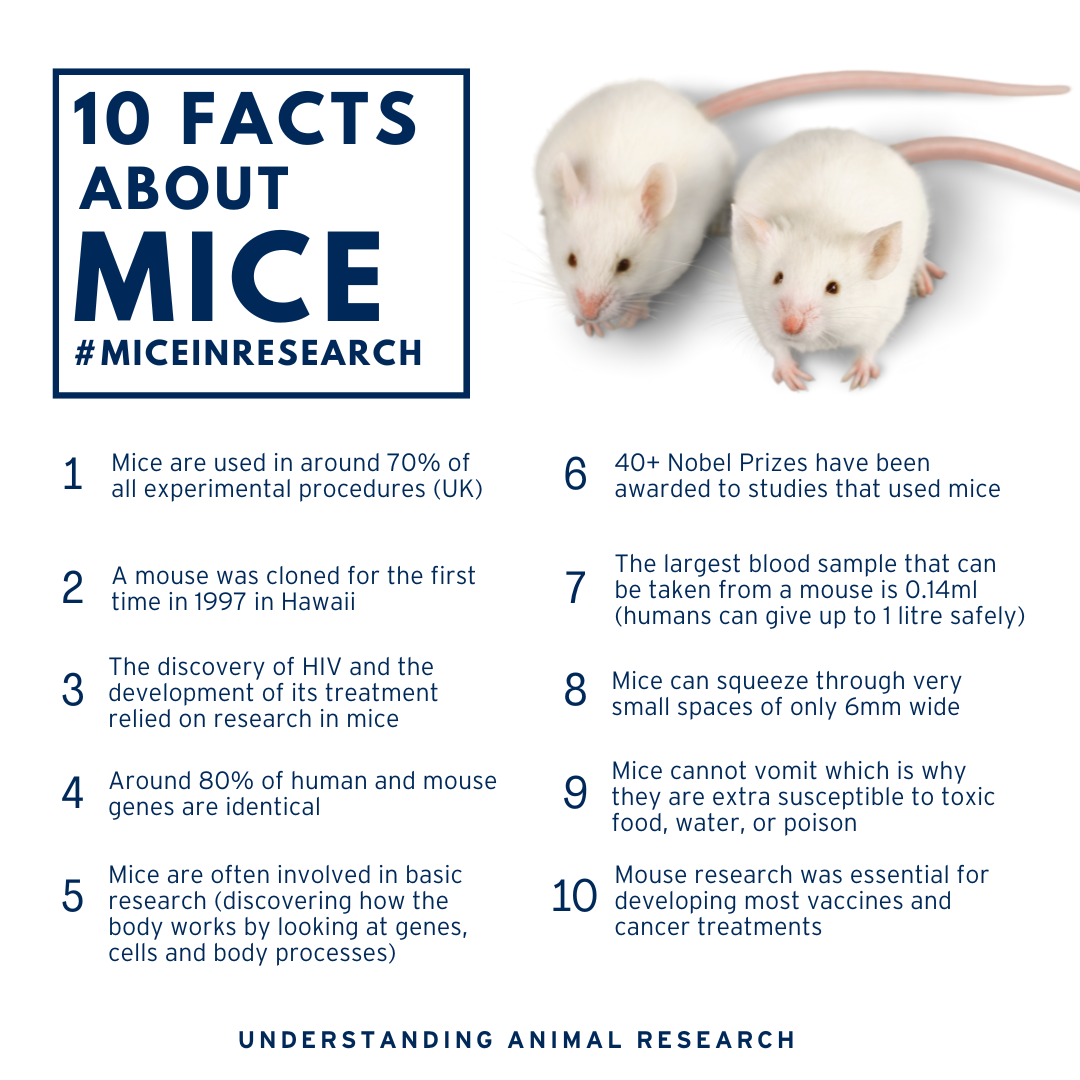
Download "10 facts about mice in research" from the UAR Infographic Library.
Animal welfare and the 3Rs
The principles of Replacement, Reduction and Refinement (the 3Rs) guide all licensed research in the UK. Advances in cell culture, organoids and computational modelling increasingly complement animal studies and must be used in place of animals whenever possible. Where animal research remains necessary, it is regulated and subject to ethical review.
In the UK, we maintain some of the strictest laboratory animal welfare standards in the world. All research animals must be housed according to the minimum requirements laid out by regulators. Different animals require different care, depending on their natural environment and behaviours.
For example, lighting in the laboratory is timed to maintain a natural day/night cycle that matches the species circadian rhythm, the temperature of an animal room is determined depending on what the species finds most comfortable, and animals are provided with species-specific activities (enrichment) that stimulate them and enable them to express their natural behaviours. Many laboratories have cages with automatic watering systems, as well as individually ventilated cages (IVC), which ensure a clean and consistent airflow within the cage.
Facilities in the UK are not allowed to keep animals in cages with grated floors, they must use solid flooring and provide bedding materials that are comfortable for the animal.
Caring for mice in the laboratory
Mice used in scientific research are cared for by specially trained Animal Technicians. Mice must be housed in groups, except in exceptional circumstances. For example, if recovering from surgery mice may be temporarily housed alone to prevent accidental injury or increased stress that may occur in group housing. Most laboratory mice are fed a specially formulated pellet diet to ensure they are receiving optimum nutrition. Mice are provided with appropriate enrichment such as items to gnaw on, tunnels and houses, and different textures of bedding.
Below is an example of a standard cage for laboratory mice in the UK, which meets the minimum enclosure requirements set out by the UK Home Office.
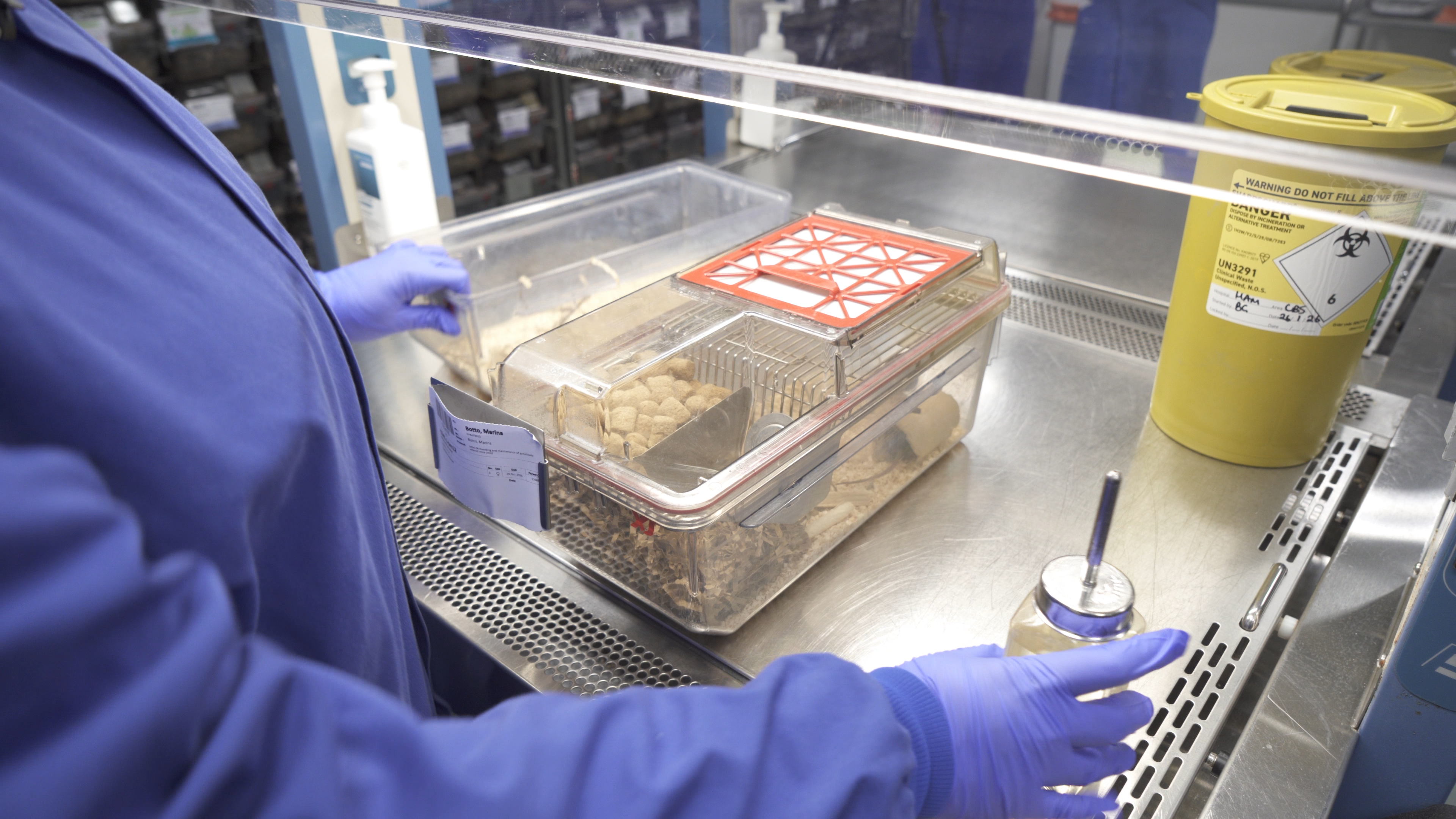
An animal technician carries out a cage change in the mouse facility at Imperial College London.
Visit the Imperial lab and others virtually at LabAnimalTour.org.
Take a tour around a mouse facilitiy in the Imperial College London Lab Tour and see the mice up close. Click the video symbol to hear about Imperial's mouse research and see animal technicians carrying out husbandry tasks. Use the navigation arrows to access other areas of the laboratory.
For best practice guidelines on housing and husbandry for mice in the laboratory, see NC3Rs Housing and husbandry: Mouse.
For the minimum housing requirements by law, see Code of practice for the housing and care of animals bred, supplied or used for scientific purposes.
For more information on housing laboratory animals see The 3Hs Initiative: Housing
More information about mice in scientific research
UAR articles featuring research in mice
In the UK, more than 130 organisations have signed the Concordat on Openness on Animal Research. Concordat signatories provide publicly available information about their animal research online. Visit their website to learn more.
List of Concordat on Openness signatories
Research in mice at the University of Cambridge
Research in mice at the Francis Crick Institute