Immunotherapy has ushered cancer treatment into a new era, offering hope to patients with late-stage metastatic cancers. Recognising its impact, this paradigm-shifting therapy was named “Breakthrough of the Year” in 2013 by Science magazine. Chimeric Antigen Receptor T (CAR-T) cell therapy is a promising new category of immunotherapy that has already transformed treatment for some patients with advanced, hard-to-treat cancers, and researchers believe it could go much further still.
Key takeaways :
- CAR-T cell therapy genetically modifies a patient's own T-lymphocytes to recognise and destroy cancer cells, adding a receptor called a chimeric antigen receptor (CAR) that targets a specific marker on tumour cells.
- In the USA, the FDA first approved a CAR-T cell therapy in 2017, for paediatric and young adult acute lymphoblastic leukaemia, following decades of research that began with a 1987 discovery by Japanese immunologist Dr. Yoshikazu Kurosawa.
- CAR-T therapy is currently approved in the USA for certain lymphomas, leukaemias, and multiple myeloma, but is far less effective against solid tumours, which account for about 90% of adult cancers and 30% of childhood cancers.
- A single course of CAR-T treatment can cost up to $500,000 and takes 21 to 35 days to manufacture, making cost and turnaround time major barriers to wider access.
- Beyond cancer, CAR-T technology is being explored for autoimmune diseases, fibrosis and infectious diseases like AIDS.
What are CAR-T cells ?
To understand CAR-T cells, it helps to start with T-lymphocytes, a type of white blood cell that plays a crucial role in the body's defence mechanisms. T-lymphocytes typically patrol the body and destroy harmful invaders, including bacteria and cancer cells. The problem is that some cancers have found ways to disable or hide from these cells, letting tumours grow unchecked.
Researchers have found a way around this, by re-engineering a patient's own T-lymphocytes to make them better cancer fighters. T-lymphocytes are collected from the blood of patients, and are genetically modified in the lab to produce a new receptor called a chimeric antigen receptor (CAR) on their outer surface. This receptor acts like a homing device, letting the modified cells –now called CAR-T cells –recognise and lock onto a specific marker (called an antigen) found on the surface of cancer cells. The CAR-T cells are grown in large numbers and infused back into the patient, where they seek out and destroy tumour cells carrying that marker.
Because different cancers carry different markers, each CAR is custom-built to recognise one specific type of cancer. That precision comes at a cost. Manufacturing this high-tech cancer immunotherapy is complex, expensive, and takes four to six weeks, which is why this therapy is typically reserved for cases where other treatments have already been tried. To date, the US Food and Drug Administration (FDA) has approved CAR-T cell therapies for certain lymphomas, leukaemias, and multiple myeloma.
The development of CAR-T cells
The concept of a chimeric receptor goes back to 1987, when Japanese immunologist Dr. Yoshikazu Kurosawa and his team at the Institute for Comprehensive Medical Science in Aichi, Japan, showed that adding these engineered receptors to mouse T cells could switch on their response.
The first generation of CAR-T cells followed in 1993, showing promising anti-cancer properties both in vitro and in different mouse models. As with any new treatment, these animal studies were an essential step. They helped establish that the approach was biologically plausible and pre-clinically safe before moving CAR-T cell therapies into human trials.
Based on those encouraging results, researchers launched the first human trials of CAR-T therapy in patients with ovarian cancer and metastatic kidney cancer. The results were disappointing: tumours shrank very little, and in most patients the CAR-T cells disappeared from the body within one to two months. Later trials confirmed that these first-generation CAR-T cells simply weren't effective enough in combating cancer in humans, pushing researchers to optimise their design.
Their work paid off. Second-generation CAR-T cells showed increased expansion and persistence in humans, along with stronger anti-tumour activity in mice. These improved CAR-T cells went on to achieve remarkable results in human clinical trials, and in 2017 the first CAR-T cell therapy was approved in the USA by the FDA for the treatment of paediatric and young adult Acute Lymphoblastic Leukaemia.
What animal studies got right, and where they fell short
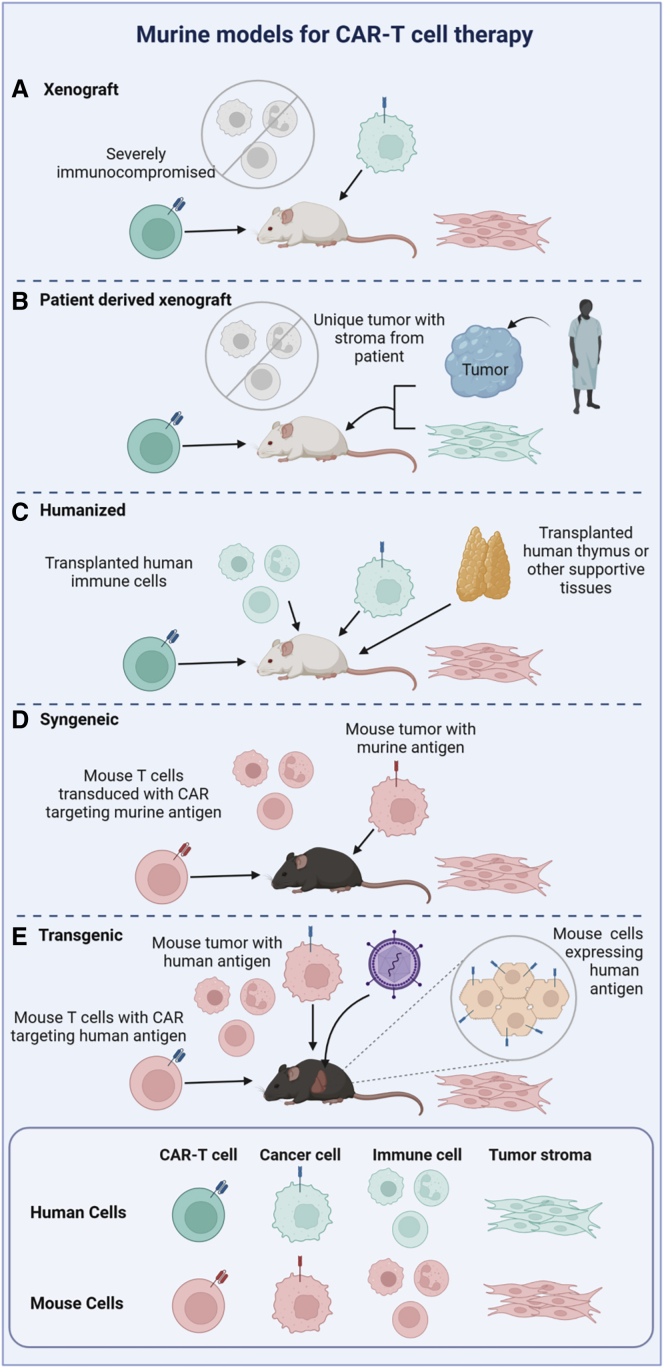 It is undeniable that animal studies played a pivotal role in CAR-T cell therapy development. Without the early evidence of anti-cancer properties in mice, researchers would have never tried them in humans. But no animal model perfectly mirrors human biology, which led to incomplete translation from preclinical models to clinical trials.
And as more clinical data has rolled in on CAR-T cell therapies, it is becoming increasingly apparent that animal models do not always fully predict how CAR-T cells will behave in patients, especially when it comes to side effects and how the cells actually work in the body.
For example, xenograft mouse models failed to predict a serious side effect (immune overreactions driven by cytokine) now well known in human patients, highlighting the limitations of animal models. Part of the challenge is that CAR-T cells aren't like ordinary drugs. They're “living drugs” that multiply, travel through the body, and persist for different lengths of time depending on the signals they pick up inside each patient. This makes finding the right animal models particularly challenging, more so than for conventional drugs.
None of this means animal models are not useful. Each type of model has its own strengths and limitations that researchers can put to good use. The key going forward is understanding where animal data lines up with human outcomes and where it doesn't, so that future studies can choose and design animal models for optimal evaluation of future CAR-T cell products.
Research is still needed – moving beyond cancer
CAR-T therapy has come a long way in the treatment of cancer, but several obstacles stand between it and wider, more effective use. Researchers are still working to understand and prevent the rare but serious side effects that can occur in patients.
Cost and production speed remain major hurdles too. A single treatment can cost up to $500,000, and manufacturing takes 21 to 35 days –precious time that some patients don't have. To make the therapy more affordable and accessible, researchers are testing several strategies, including “off-the-shelf” allogenic CAR-T cells made in advance from donor cells (rather than custom-made for each patient) and methods to generate CAR-T cells directly inside the body. 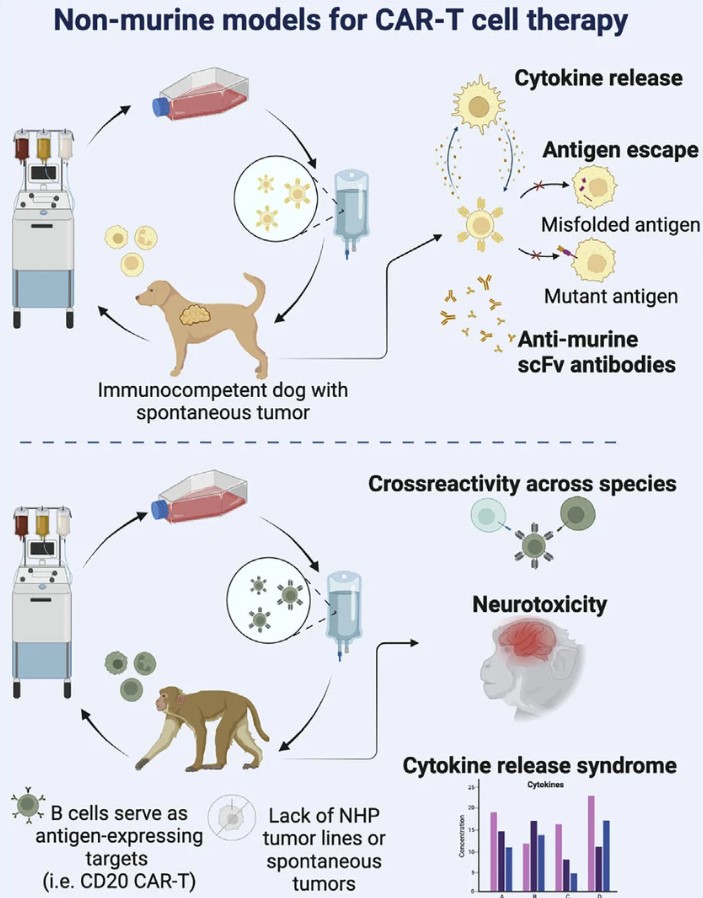
There's also the challenge of solid tumours. While CAR-T therapy has succeeded against blood cancers, it has been far less effective against solid tumours, which make up roughly 90% of adult cancers and 30% of childhood cancers. That said, clinical trials are now underway testing new CAR-T approaches aimed at additional cancer targets, including solid tumours, offering hope that the therapy's reach will keep expanding.
The success of CAR-T cells has opened doors well beyond cancer. Researchers are exploring the approach to treat autoimmune diseases and fibrotic diseases –conditions involving excess scar tissue, with promising early results against liver and heart fibrosis in mice. Scientists are also investigating infectious diseases.
The remarkable achievement of CAR-T cell therapy has also inspired scientists to engineer other CAR immune cells, including natural killer (NK) cells, NKT cells, macrophages, and neutrophils, for therapeutic purposes. Researchers are even beginning to bring these therapies into veterinary medicine, with trials recently started in dogs.
The progress made in CAR-T cell therapy is a powerful reminder of what sustained scientific investment can achieve and highlights the importance of continued investment in scientific research and innovation and the value of appropriate animal models. As research continues, CAR-T and related immune-cell therapies hold real promise for improving lives around the world.
References
Figure 1 - Murine models for CAR-T cell therapies, https://doi.org/10.1016/j.omtm.2022.08.008
Figure 2 - Non-murine models for CAR-T cell therapies, https://doi.org/10.1016/j.omtm.2022.08.008

Last edited: 27 July 2026 09:35