It sounds like something out of science fiction. Scientists successfully engineered human blood cells into immature sperm, and incubated them inside a tiny pouch grown on a mouse’s kidney. The procedure is an early but important step toward one day growing sperm entirely in the lab.
- Scientists grew early-stage human sperm cells from reprogrammed blood cells on a region of a mouse's kidney known to support transplanted tissue.
- After six months, the human cells developed into spermatogonia — the immature sperm cells that normally lie dormant until puberty — with gene activity closely matching that of natural human spermatogonia.
- The cells did not mature into functional sperm, in either mice or macaque monkeys, suggesting species differences between human and mouse biology may be blocking further development.
- Infertility affects roughly 15–20% of couples, male infertility causing nearly half of these cases. 40% of male infertility cases remain unexplained — a gap this research aims to help close.
- Fully lab-grown sperm remains years away. Researchers plan to cultivate the lab-grown immature sperm cells with human (not mouse) supporting cells next. Any fertility-relevant use will be tested in primates first due to ethical limits on human embryo research.
Fertility problems are becoming increasingly common, affecting 15–20% of couples. And male infertility accounts for nearly half of these cases. The most common causes include lifestyle factors and problems with how sperm are made, move, or shaped — but for about 40% of male infertility cases, the cause is still unknown. Researchers are working to understand the full process of sperm production, and offer potential solutions. One promising avenue: growing sperm in the lab.
Turning stem cells into sperm
For over a decade, Kotaro Sasaki, a developmental biologist at the University of Pennsylvania, and his team have been working toward making mature human sperm in the lab. In 2015, his team discovered how to reprogram in vitro a type of human stem cell found in the blood, into early embryonic cells – the kind that eventually develop into eggs or sperm.
But cells don’t thrive in isolation. Proteins and other molecules instruct immature sperm cells when to grow, divide, or pause. Physical forces, such as the twisted architecture of the testes and the flow of fluid round the cells, matter too. Recreating this complex environment in a dish has been one of the biggest obstacles to studying – and growing – sperm outside the body.
In 2020, five years after their initial discoveries, the researchers tried a new approach: mixing those immature human cells with non-reproductive cells from the testicles of developing mice. Although this pairing was unusual, the mouse cells provided nutrients, chemical signals and the environment needed to support sperm development, nudging it forward. It worked, but only partially. The cells did not progress beyond developmental stages normally seen in fetuses, and after 80 days the miniature structure collapsed, likely because it lacked a blood supply.
A new home in the kidney
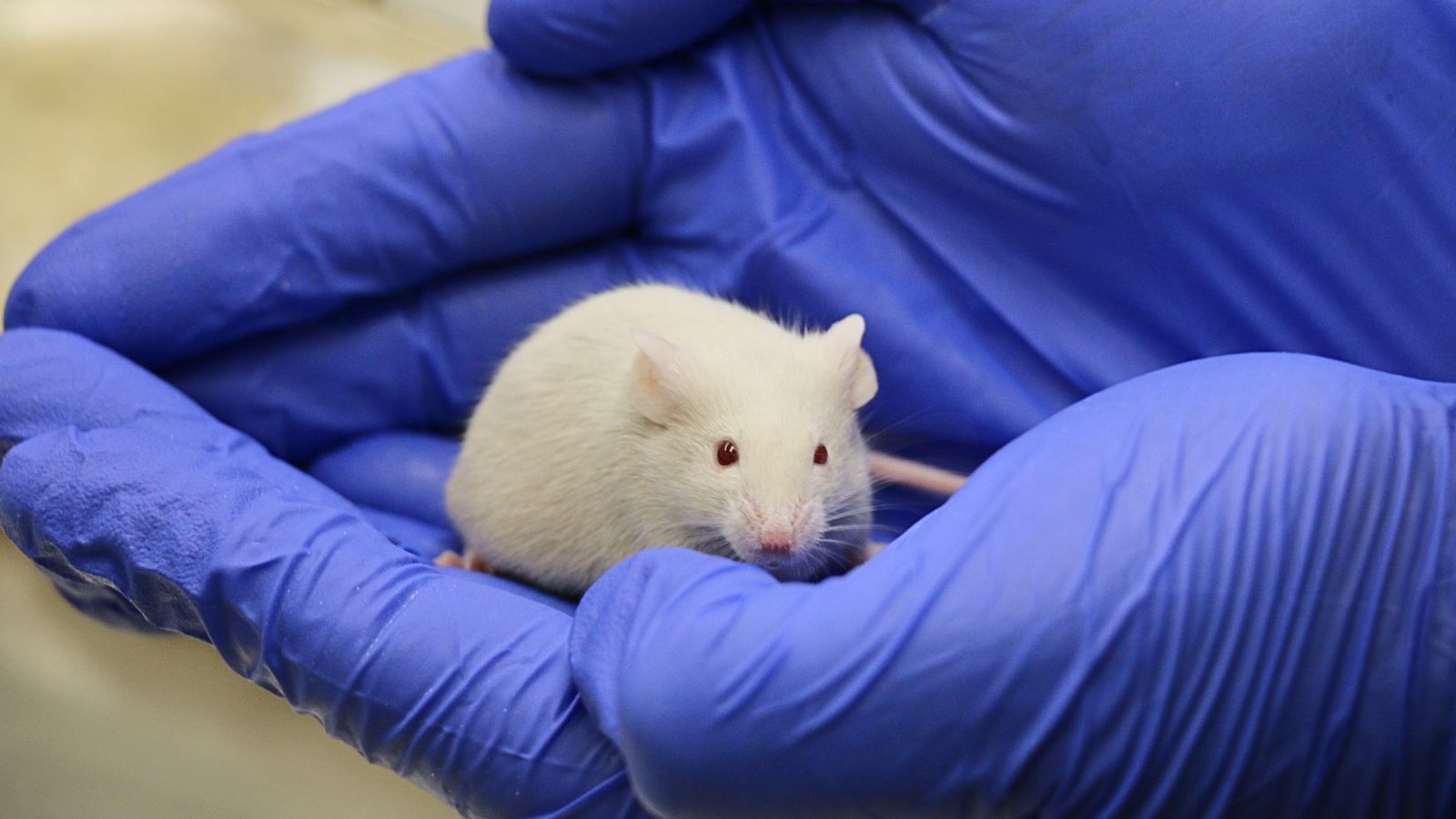
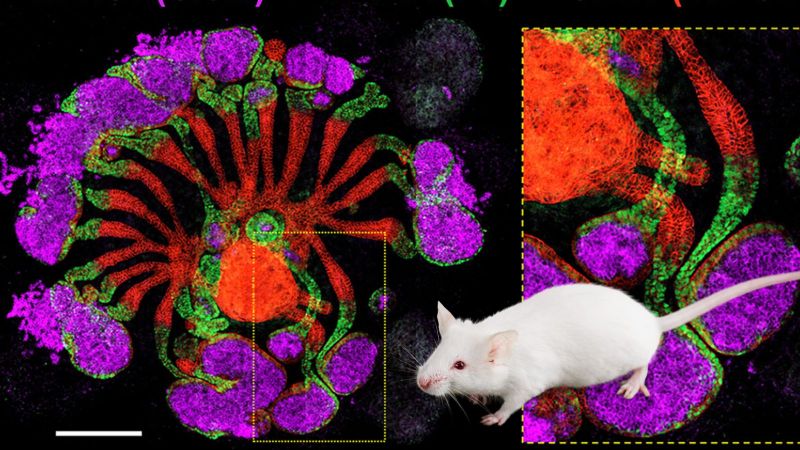
The latest study pushed the process further. To keep the mixture of cells alive longer and encourage further development, researchers transplanting it into the kidneys of immunodeficient mice on a region of the kidney known to support transplanted tissue well. There, in a pouch, the cells self-organised into tube-like structures similar to those found in the testicles, where sperm are normally produced.
Six months later, the human cells had developed into spermatogonia — early sperm cells that normally lie dormant until puberty, when they go on to form mature sperm. The activity of genes inside these cells closely matched what's seen in normal human spermatogonia. But once again, development eventually stalled: the cells never matured into functional sperm. The same result occurred when the researchers ran the experiment in macaque monkeys.
What is the block? Finding the right animal model
One likely explanation lies in the developmental differences between species such as humans and mice. Sperm development is complex, and depends on nearby cells, but also on hormone signals from distant organs — and these factors may not be identical in mice and humans.
This wouldn't be the first time findings from mice in the developmental field failed to translate to humans. Japanese researchers previously managed to create mouse eggs and sperm from mouse skin cells, and later used the technique to generate offspring from two male mice. But translating and applying the same approach to humans or other primates has proven much harder, largely because of how differently the species develop.
Still, this new system to grow sperm gives scientists a new way to study the earliest stages of human sperm development. And because any future clinical applications would first require extensive testing in nonhuman primates, the team also generated immature sperm cells from monkeys, whose reproductive biology more closely mirrors our own.
Studying human fetal development directly is difficult for obvious ethical and practical reasons, so mice have long been the default model for studying how eggs and sperm develop in mammals. This has taught scientists essential information that applies across species, including humans, but it has also left gaps, since the exact mechanisms differ from species to species and need to be studied individually. As one Nature article put it, scientists trying to understand and recreate the earliest stages of sperm and egg development are still largely in the dark when it comes to humans.
The goal: lab-made mature human sperm
For now, growing mature sperm in a dish is still out of reach, but this latest result is a step in the right direction. Next, the researchers plan to try growing the immature human cells alongside human — rather than mouse — supporting cells, which may help them mature further. They also want to confirm whether the spermatogonia are actually functional – and can in principle give rise to a baby. Because those experimenst aren’t possible in humans for ethical reasons, Sasaki hopes to test them in macaques instead.
If the approach eventually succeeds, lab-grown sperm could open a new window into the earliest stages of sperm development, a process that's notoriously difficult to study because it begins before birth. Creating sex cells from scratch has the potential to revolutionise human reproduction though some of the potential clinical applications remain controversial, particularly the prospect of using lab-grown sperm or eggs to make babies. Some researchers hope the approach could eventually treat certain types of infertility, but it also raises real ethical concerns, including the prospect that it could make it easier to genetically modify reproductive cells to produce “designer babies”. In 2025, the United Kingdom’s Human Fertilisation and Embryology Authority urged the government to explicitly address lab-grown reproductive cells in future legislation, and the International Society for Stem Cell Research has similarly called for careful oversight and public engagement before clinical use.
In the meantime, this technique's more immediate value is in research: it could help scientists study the earliest stages of human sperm development and investigate causes of male infertility. Reproducing sperm development in the lab has uses beyond fertility treatment, such as testing whether drugs interfere with reproduction.

Last edited: 25 August 2026 12:10