A few years ago, measles was on the verge of being eradicated in several countries thanks to vaccines, still the safest and most effective way of preventing infection. However, infections have risen sharply in recent months. In England, 2,911 cases were confirmed in 2024 – the highest number since 2012 – a trend echoed across Europe, Asia, and the United States, largely due to insufficient vaccine coverage. At the end of April 2025, World Health Organization (WHO), UNICEF, and Gavi, the Vaccine Alliance, warned of a concerning global increase in vaccine-preventable disease outbreaks, including measles.
Animal research: the foundation of measles vaccination
Behind the dramatic success of measles vaccination lies more than half a century of animal research. Long before vaccines could be safely given to humans, scientists relied on animal models to understand the virus, develop vaccines, and ensure their safety.
Because they are susceptible to measles virus infection and develop a disease similar to that seen in humans, nonhuman primates – monkeys – have been central to measles research and the development of vaccines from the very beginning. Over a century ago, experiments involving the inoculation of monkeys with material from infected patients helped identify the measles virus itself.
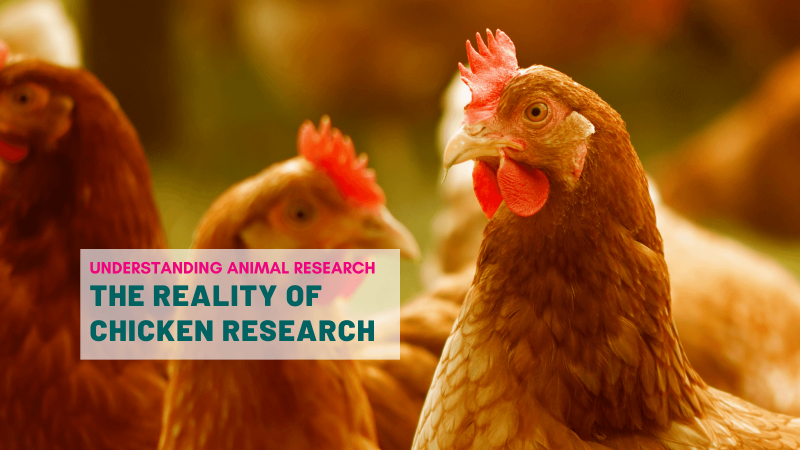
In the 1960s, animal studies once again proved critical. Research in monkeys using measles virus grown in chicken embryo cells provided the evidence needed to develop the first live attenuated vaccines. These vaccines would go on to become one of the most effective public health interventions in history.
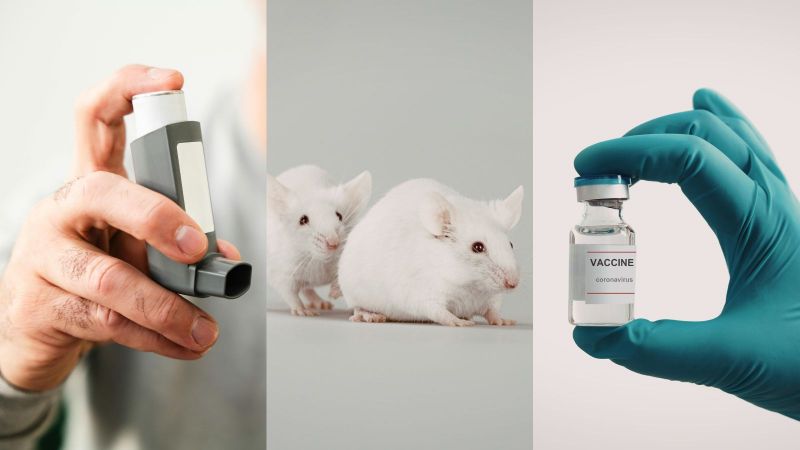
Animal research continues to play a vital role today. Modern measles vaccines have been tested in nonhuman primates to confirm their safety and effectiveness before use in humans. At the same time, researchers are using animal models to develop next-generation measles vaccines, including some that could be given to immunocompromised individuals and pregnant women, who cannot receive live vaccines.
Beyond vaccine development, animal studies have deepened scientific understanding of the virus. Experimental infections in monkeys have revealed how the virus spreads through the body and causes disease. Other models– including transgenic mice, hispid cotton rats, and ferrets– have helped researchers understand immune responses and improve vaccine design.
Animal research has also contributed to the development of potential antiviral treatments, adding another layer of protection against measles. Together, these efforts have given all the tools needed to make measles a disease of the past.
Does vaccination still matter?
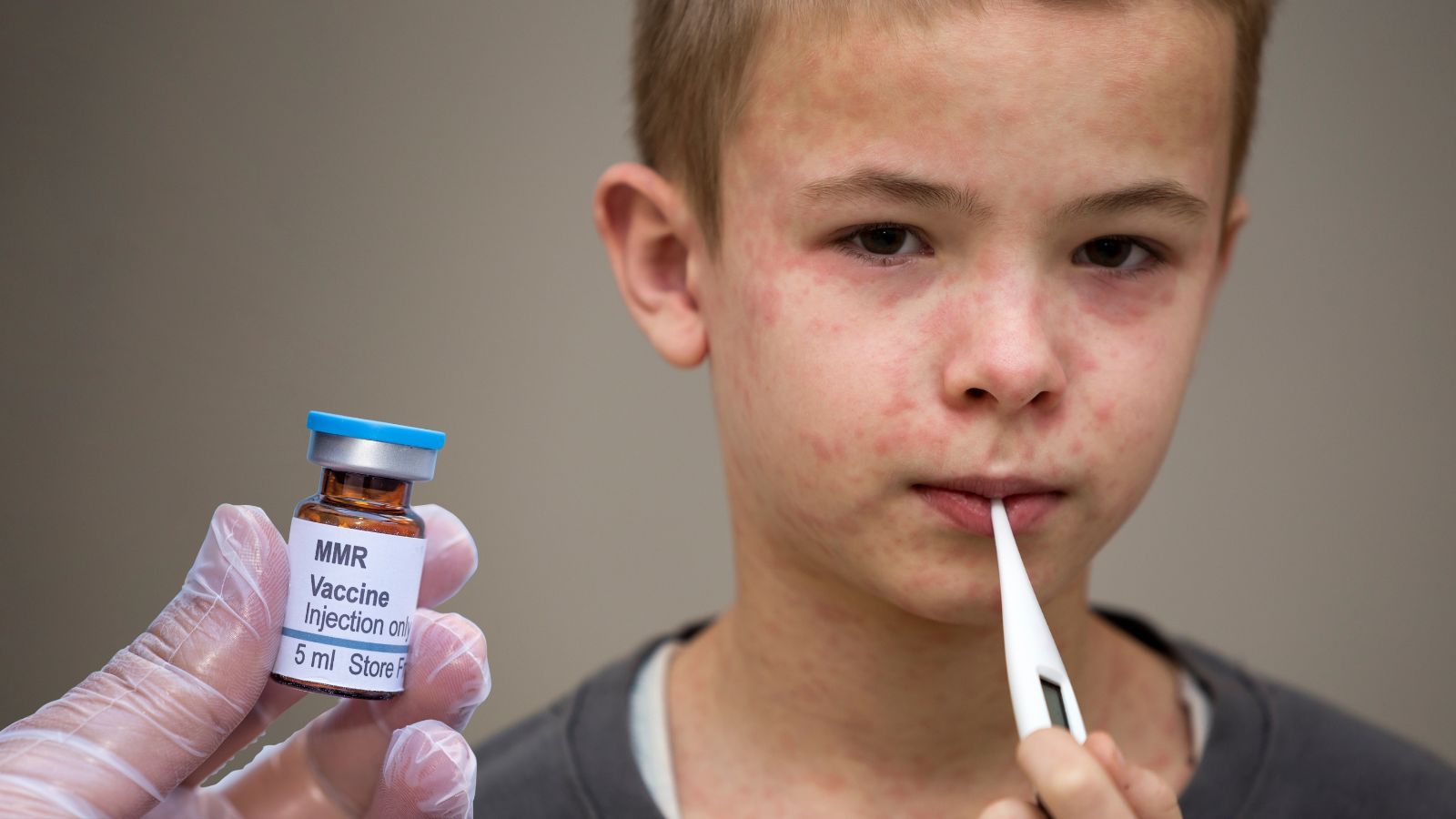
Measles is an extremely contagious viral disease. Before widespread vaccination, it affected almost every child worldwide. As well as causing the characteristic red rash, it can lead to serious complications. Historically, measles killed thousands and left approximately 33 out of every 100,000 people with long-term neurological damage or developmental disabilities.
The introduction of vaccination in the 1960s transformed this picture. According to Gavi, the Vaccine Alliance, measles vaccination has saved an estimated 94 million lives worldwide since 1974. In the WHO Region of the Americas, cases fell by more than 99% after 1990, demonstrating the power of sustained immunisation programmes.
Vaccination remains the safest and most effective way to prevent measles. It also creates herd immunity, reducing the risk of outbreaks and providing vital protection for vulnerable individuals. However, because measles is one of the most contagious human diseases, as much as 95% of a population needs be vaccinated to stop its spread. With global coverage at roughly 70%, measles continues to be the leading vaccine-preventable cause of death in children.
Can the measles vaccine be trusted?
The measles vaccine is one of the safest and most effective vaccines available today, a success built on decades of rigorous scientific testing, including extensive animal research.
It is commonly administered in combination vaccines such as MR, MMR, or MMRV. In the UK, the MMRV vaccine is offered at 12 and 18 months of age since 2019, replacing the earlier MMR-only schedule. After two doses, around 99% of children are protected against measles and rubella, 97% against chickenpox, and approximately 88% against mumps.
This success in humans reflects the careful, stepwise research process that begins in animal models. These studies ensure that vaccines are both effective and unlikely to cause harm before they are ever given to people.
Ongoing animal research continues to refine measles vaccines and explore new delivery methods, such as needle-free options, helping to make vaccination even more accessible worldwide. With this extra push, researchers hope measles will become a disease of the past – but only if vaccination rates recover.
Last edited: 6 July 2026 10:53