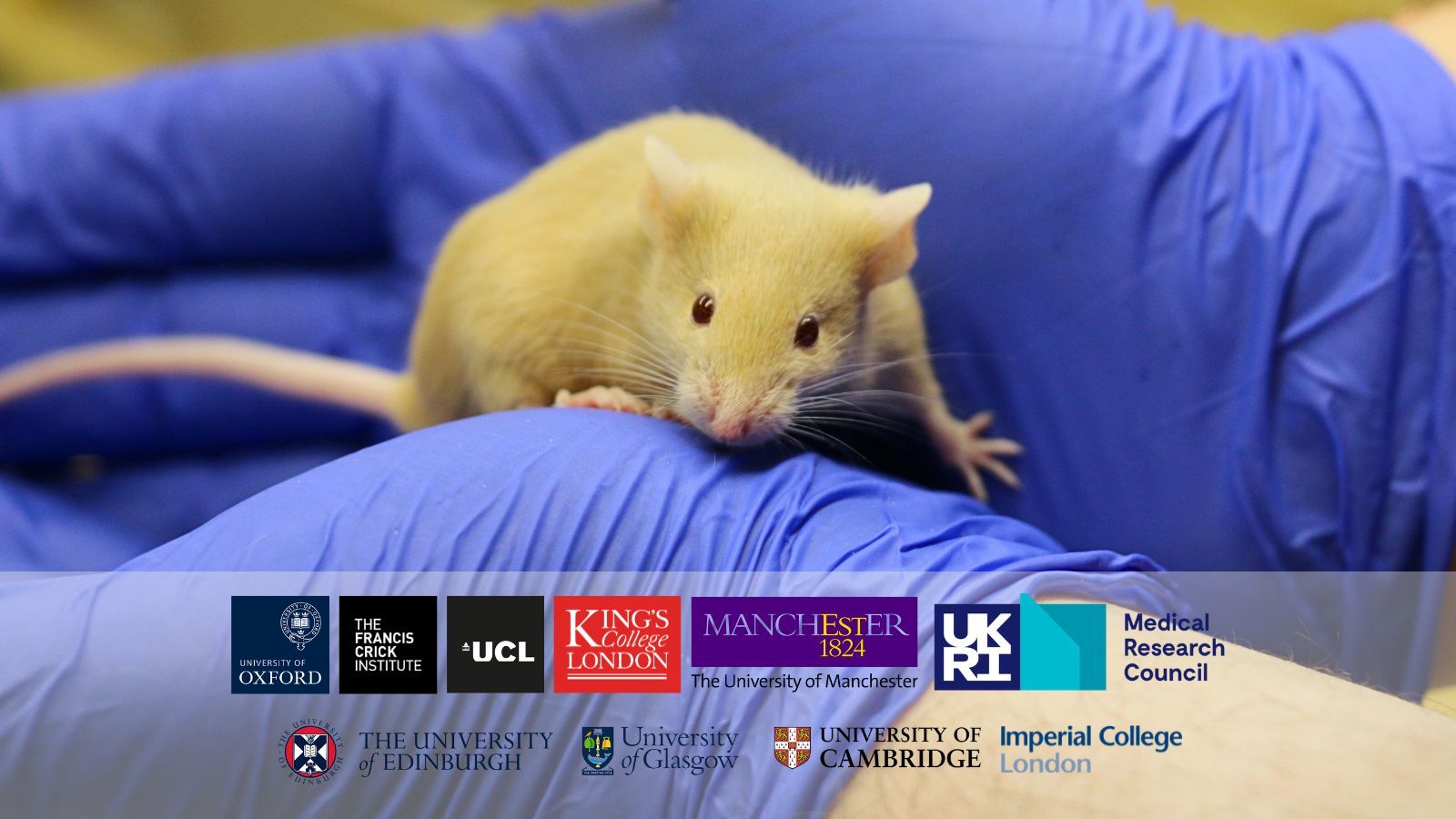
Ten organisations carried out half of all animal research in Great Britain in 2025
-
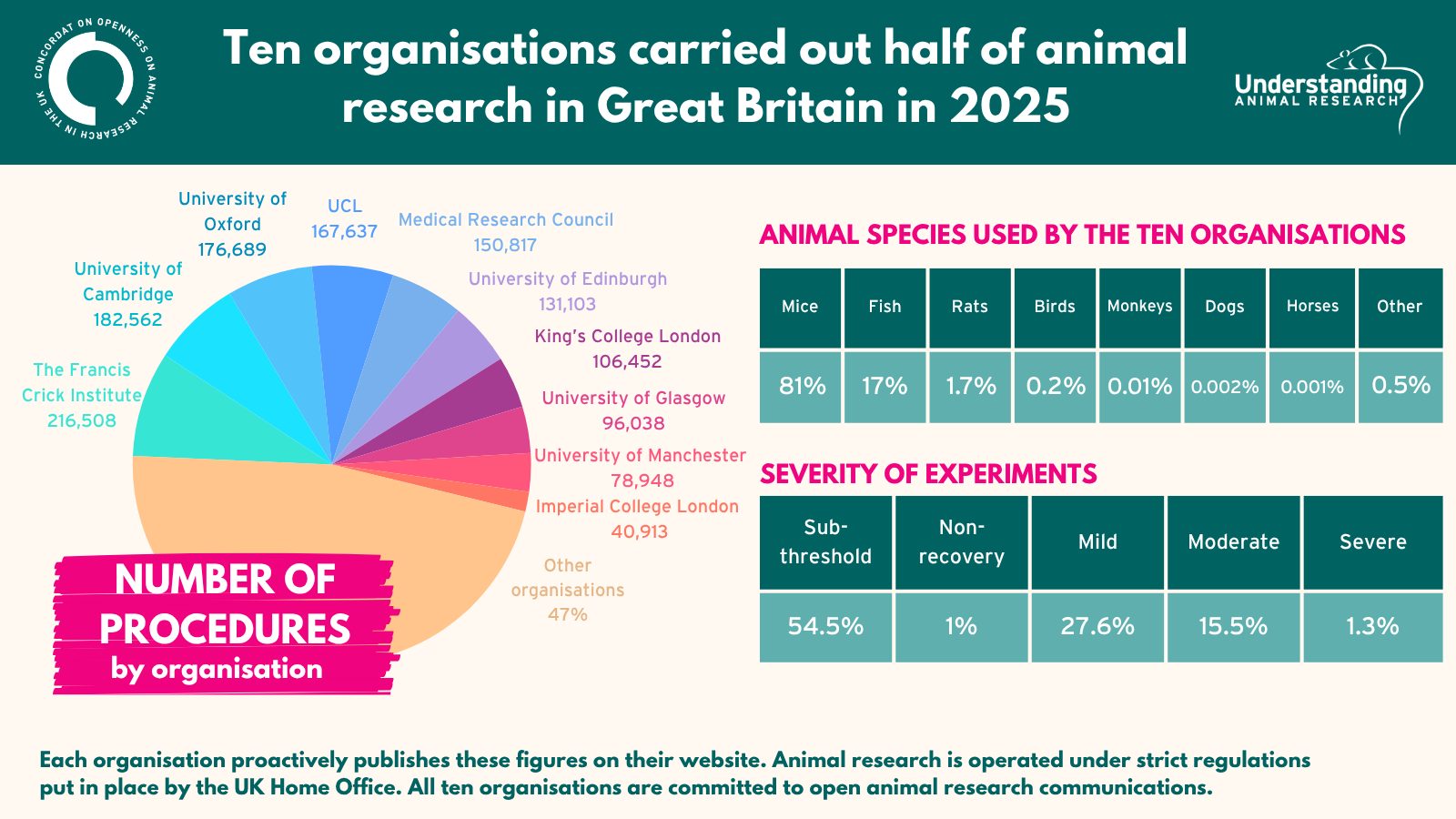
99% of procedures carried out in mice, fish, rats, and birds
-
69 research institutions and funders have proactively shared their 2025 animal research statistics
-
82% of procedures caused pain equivalent to, or less than, an injection
Download "Ten organisations carried out half of all animal research in Great Britain in 2025".
Today, 9 July 2026, Understanding Animal Research (UAR) has published a list of the ten organisations that carried out the highest number of animal procedures – those used in medical, veterinary, and scientific research – in Great Britain in 2025. These statistics are freely available on the organisations’ websites as part of their ongoing commitment to transparency and openness around the use of animals in research.
This list coincides with the publication of the Home Office’s report on the statistics of scientific procedures on living animals in Great Britain in 2025.
The ten listed organisations were responsible for 1,347,667 procedures, 53% (more than half) of the 2,537,507 procedures carried out on animals for scientific research in Great Britain in 2025*. Of these 1,347,667 procedures, more than 99% were carried out on mice, fish, rats, and birds and 82% were classified as causing pain equivalent to, or less than, an injection.
The ten organisations are listed below alongside the total number of procedures they carried out in 2025. Each organisation’s name links to its animal research webpage, which includes more detailed statistics. Case studies explaining how animal research has been used in recent medical research are also provided in the Notes to Editors section. This is the eleventh consecutive year that organisations have come together to publicise their collective statistics and examples of their research.
|
Organisation |
Number of Procedures (2025) |
|
216,508 |
|
|
182,562 |
|
|
176,689 |
|
|
167,637 |
|
|
150,817 |
|
|
131,103 |
|
|
106,452 |
|
|
96,038 |
|
|
78,948 |
|
|
40,913 |
|
|
TOTAL |
1,347,667 |
Sixty-nine organisations have proactively published their 2025 animal research statistics
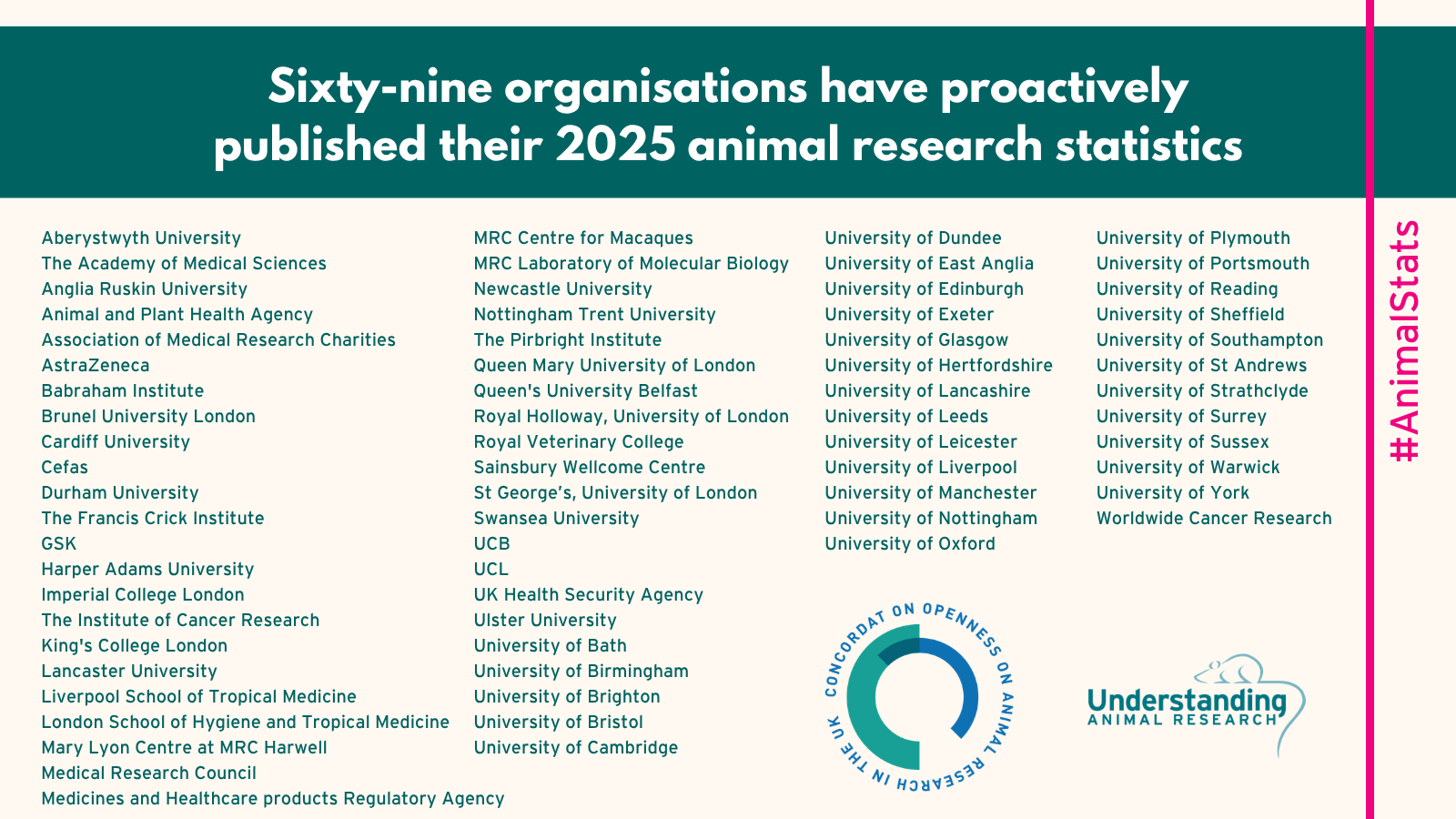
UAR has also produced a list (see appendix) of 69 organisations in the UK that have publicly shared their 2025 animal research statistics. This includes organisations that carry out or fund animal research.
All organisations are committed to the ethical framework called the ‘3Rs’ of replacement, reduction and refinement. This means avoiding or replacing the use of animals where possible, minimising the number of animals used per experiment and optimising the experience of the animals to improve animal welfare. However, as institutions expand and conduct more research, the total number of animals used can rise even if fewer animals are used per study.
All organisations listed are signatories to the Concordat on Openness on Animal Research in the UK, which commits them to being more open about the use of animals in scientific, medical and veterinary research in the UK. More than 130 organisations have signed the Concordat, including UK universities, medical research charities, research funders, learned societies and commercial research organisations.

Hannah Hobson, Head of Communications and Engagement at Understanding Animal Research, said:
“Animal research remains a small but vital part of the quest for new medicines, vaccines and treatments for humans and animals. Alternative methods are increasingly being phased in but, until we have sufficient reliable alternatives available, it is important that organisations that use animals in research maintain the public’s trust in them. By providing this level of information about the numbers of animals used, and the experience of those animals, as well as details of the medical breakthroughs that derive from this research, these Concordat on Openness signatories are helping the public to make up their own minds about how they feel about the use of animals in scientific research in Great Britain.”
Sarah Hart-Johnson, Director of the Crick’s Biological Research Facility, said:
“These statistics reflect both the scale and complexity of the science taking place across the institute and the important work we support through collaborations with university partners. As a national biomedical research institute, our facilities and expertise enable research that extends far beyond our own laboratories.
In areas where whole biological systems need to be understood or complex diseases modelled, animals remain an essential part of research. Their use is closely integrated with complementary non-animal methods and follows rigorous scientific and ethical review.
Reducing reliance on animals is fundamental in the way we conduct research, ensuring our science remains robust and impactful. Our scientists are leaders in developing and sharing new approaches, including organoids, organs-on-chips, stem cell-based models and computational methods.”
Professor Jon Simons, Head of the School of Biological Sciences at the University of Cambridge, said:
“While animal use in research remains an important part of advancing scientific discovery and improving our understanding of complex diseases, it is equally important to recognise the need for continued progress in identifying alternative research models. We are committed to advancing new approaches and putting them into practice to complement or replace animal studies with robust and evidence-based alternatives.”
James Bussell, Director of Biomedical Services at the University of Oxford, said:
“Across the University of Oxford, researchers are investing in and developing innovative approaches that can replace or reduce the use of animals in research wherever scientifically possible. However, for some areas of biomedical research, carefully regulated animal studies remain an essential part of advancing our understanding of disease and developing new treatments. We are committed to ensuring that any such work is undertaken only where necessary and under rigorous oversight.
The welfare of the animals in our care is of paramount importance. We work continuously to improve standards of care and husbandry, while ensuring that every project involving animals meets strict legal, ethical and regulatory requirements.”
Professor Geraint Rees, UCL Vice-Provost (Research, Innovation & Global Engagement), said:
“Biomedical scientists at UCL use every tool at their disposal to develop life-saving treatments and improve human health. Animals are used in research only when necessary, as our scientists continually develop new ways to replace animals in research, reduce their usage, or refine their methods to mitigate harm, while maintaining the highest standards of high-impact, innovative science.”
Dr Ivan Pavlov, Head of Preclinical Good Research Practice Policy at the Medical Research Council, said:
“Research involving animals continues to underpin many of the advances that improve lives. While alternatives are increasingly available, some questions about how complex systems, such as the brain, function can currently only be addressed using living tissues.
For example, at the MRC Laboratory of Molecular Biology, research involving mice helped uncover new complexity in how key proteins interact to regulate daily rhythms within a functioning neural circuit, challenging the long-held model of how the body's internal clock keeps time.
These findings provide important new insights into how the body's internal clock operates and could support the future development of improved treatments for conditions such as sleep disorders and depression.
We remain committed to supporting the highest standards of animal welfare and to being open about the role that animals continue to play in medical research.”
Dr Catherine Martin, Vice-Principal Corporate Services, University of Edinburgh, said:
“Studies involving animals enable researchers at the University of Edinburgh to advance understanding of conditions such as Alzheimer’s, heart disease and many forms of cancer, and to help improve animal health.
We strive to develop approaches to reduce, refine and replace animal models, and only use animals in research when no suitable alternatives exist. Demonstrating our commitment to the 3Rs, fewer animal procedures were carried out at the University in 2025 than in previous years.
The University is committed to being open about its use of animals in research and we have been recognised by Understanding Animal Research as a Leader in Openness since 2020. We continue to take steps to further our transparency, including recently developing a virtual tour of our animal facilities to help demonstrate how we uphold the highest standards of animal welfare.”
Julie Keeble, Director of Biological Services and Co-Chair of the Centre for 3Rs & Translational Innovation at King's College London, said:
“The responsible use of animals in research remains essential to advancing world class research, and through initiatives such as the Centre for the 3Rs in Translational Innovation at King's, we are committed to ensuring this work is carried out to the highest standards of care, welfare and scientific rigour. At the same time, we are actively supporting the development and adoption of alternative methods, while recognising that animal models continue to play a vital role where no viable alternatives yet exist.”
David Duncan, University of Glasgow Secretary and Deputy Vice Chancellor, said:
“Research using animals makes an important contribution to the treatment and cure of major human diseases and viruses, including cancers, Alzheimer’s disease, flu and arthritis. At the University of Glasgow animals are used in research only where it is essential, and we remain dedicated to the principles of reduction, refinement, and replacement.
The University is committed to the development of alternative methods – such as computer modelling, tissue culture, cell and molecular biology, and research with human material – but some work involving animals must continue for further advances in medical sciences to be made. All research undertaken on animals is conducted under strict ethical and welfare guidelines, under licence by the Home Office.”
Dr Maria Kamper, Strategic Director of the Biological Services Facility at The University of Manchester, said:
“Scientific research involving animals remains a cornerstone of our ability to understand complex diseases and develop life-saving medical breakthroughs. At The University of Manchester, we recognize that the privilege of conducting this research carries a profound responsibility – not only to the animals in our care but to the public we serve. Our commitment to the Concordat on Openness is reflected in our award-winning digital platforms, where we share the reality of our work through virtual tours, detailed case studies, and transparent data. However, transparency is only possible because of our foundational 'culture of care’. By prioritizing exceptional animal husbandry, staff wellbeing, and ethical accountability, we ensure that our scientific excellence is always matched by our integrity. As we share our latest statistics, we remain dedicated to a sustainable research environment where open communication and world-class welfare standards go hand-in-hand to benefit society as a whole.”
Professor Marina Botto, Director of Bioservices at Imperial College London, said:
“At Imperial, our researchers are committed to replace animal use where possible, reduce the number of animals needed, and refine procedures to enhance welfare. Yet, animal models remain a vital part of our biomedical research, helping researchers to uncover groundbreaking insights into important health issues like dementia, aging, gut health, cancer, lung and kidney diseases. Our drive towards both transparency and continuous improvement in animal research are highlighted by the high standard of our Facilities and the commitment of our 3RsHub.”
-Ends-
Notes to Editors
For more information, contact Hannah Hobson on 07759235176 or hhobson@uar.org.uk.
The hashtag for social media is #AnimalStats.
Understanding Animal Research (UAR) is a not-for-profit organisation that explains how and why animals are used in scientific research in the UK. Our supporters include government agencies, scientific societies, universities, veterinary schools, research funding bodies, commercial organisations and charities. Our supporters both use animals and lead the development of non-animal methods.
A list of recent animal research case studies from contributing organisations can be found below.
Further information on the Concordat on Openness on Animal Research in the UK can be found here: http://concordatopenness.org.uk
These figures refer to procedures using animals for medical, veterinary, or scientific research, as licensed by the UK’s Home Office under the Animals (Scientific Procedures) Act 1986. The use of animals to test tobacco products was banned in the UK in 1997 and it has been illegal to use animals to test cosmetic products in this country since 1998. A policy ban on household product testing using animals was introduced in 2010. Since 2013, it has been illegal to sell or import cosmetics anywhere in the UK or the EU where the finished product or its ingredients have been tested on animals.
*The Home Office recorded 2,537,507 completed procedures for Great Britain in 2025, 1,347,667 (53%) of which were carried out at these ten organisations.
https://www.gov.uk/government/statistics/scientific-procedures-on-living-animals-great-britain-2025
Full table of procedures broken down by species from top ten organisations:
|
Organisation |
Total |
Mice |
Fish |
Rats |
Birds |
Dogs |
Monkeys |
Horses |
Other |
|
The Francis Crick Institute |
216,508 |
197,681 |
18,398 |
|
|
|
|
|
429 |
|
University of Cambridge |
182,562 |
142,775 |
34,691 |
4,688 |
4 |
|
47 |
7 |
350 |
|
University of Oxford |
176,689 |
168,930 |
7,203 |
304 |
85 |
|
9 |
|
158 |
|
UCL |
167,637 |
104,157 |
60,796 |
2,197 |
|
|
|
|
487 |
|
Medical Research Council |
150,817 |
150,739 |
|
55 |
|
|
23 |
|
|
|
University of Edinburgh |
131,103 |
71,597 |
45,350 |
11,231 |
1,301 |
2 |
|
7 |
1,615 |
|
King's College London |
106,452 |
69,343 |
36,052 |
984 |
|
|
|
|
73 |
|
University of Glasgow |
96,038 |
87,791 |
5,818 |
714 |
841 |
23 |
|
|
851 |
|
University of Manchester |
78,948 |
58,121 |
16,717 |
1,807 |
|
|
|
|
2,303 |
|
Imperial College London |
40,913 |
36,860 |
1,372 |
1,259 |
1,091 |
|
|
|
331 |
|
Total |
1,347,667 |
1,087,994 |
226,397 |
23,239 |
3,322 |
25 |
79 |
14 |
6,597 |
All numbers represent completed procedures on animals in 2025. The number of procedures carried out using animals will be slightly higher than the number of animals used, as a small number of animals may be used in more than one procedure.
Full table of procedures broken down by severity categories from top ten organisations:
|
Organisation |
Sub-threshold |
Non-recovery |
Mild |
Moderate |
Severe |
Total Procedures (2025) |
|
The Francis Crick Institute |
158,373 |
832 |
25,331 |
30,273 |
1,699 |
216,508 |
|
University of Cambridge |
70,271 |
845 |
67,546 |
41,223 |
2,677 |
182,562 |
|
University of Oxford |
99,256 |
1,465 |
48,741 |
25,562 |
1,665 |
176,689 |
|
UCL |
52,150 |
4,564 |
77,601 |
32,222 |
1,100 |
167,637 |
|
Medical Research Council |
116,132 |
1,249 |
22,648 |
5,782 |
5,006 |
150,817 |
|
University of Edinburgh |
73,786 |
2,206 |
38,851 |
15,227 |
1,033 |
131,103 |
|
King's College London |
57,092 |
1,512 |
31,749 |
14,330 |
1,769 |
106,452 |
|
University of Glasgow |
57,807 |
401 |
20,213 |
16,746 |
871 |
96,038 |
|
University of Manchester |
33,870 |
413 |
29,084 |
14,570 |
1,011 |
78,948 |
|
Imperial College London |
16,083 |
514 |
10,667 |
12,668 |
981 |
40,913 |
|
TOTAL |
734,820 (54.5%) |
14,001 (1.0%) |
372,431 (27.6%) |
208,603 (15.5%) |
17,812 (1.3%) |
1,347,667 |
Examples of severity
Severity assessments measure the harm experienced by an animal during a procedure. A procedure can be as mild as an injection, or as severe as an organ transplant. Severity assessments reflect the peak severity of the entire procedure and are classified into five different categories:
Sub-threshold: When a procedure did not cause suffering above the threshold for regulation, i.e. it was less than the level of pain, suffering, distress or lasting harm that is caused by inserting a hypodermic needle according to good veterinary practice.
Non-recovery: When the entire procedure takes place under general anaesthetic and the animal is humanely killed before waking up.
Mild: Any pain or suffering experienced was only slight or transitory and minor so that the animal returns to its normal state within a short period of time. For example, the equivalent of an injection or having a blood sample taken.
Moderate: The procedure caused a significant and easily detectable disturbance to an animal’s normal state, but this was not life threatening. For example, surgery carried out under general anaesthesia followed by painkillers during recovery.
Severe: The procedure caused a major departure from the animal’s usual state of health and wellbeing. This would usually include long-term disease processes where assistance with normal activities such as feeding and drinking were required, or where significant deficits in behaviours/activities persist. Animals found dead are commonly classified as severe as pre-mortality suffering often cannot be assessed.
List of 69 UK organisations that have shared their 2025 animal research statistics:
- Aberystwyth University
- The Academy of Medical Sciences
- Anglia Ruskin University
- Animal and Plant Health Agency
- Association of Medical Research Charities
- AstraZeneca
- Babraham Institute
- Brunel University London
- Cardiff University
- Cefas
- Durham University
- The Francis Crick Institute
- GSK
- Harper Adams University
- Imperial College London
- The Institute of Cancer Research
- King's College London
- Lancaster University
- Liverpool School of Tropical Medicine
- London School of Hygiene and Tropical Medicine
- Mary Lyon Centre at MRC Harwell
- Medical Research Council
- Medicines and Healthcare products Regulatory Agency
- MRC Centre for Macaques
- MRC Laboratory of Molecular Biology
- Newcastle University
- Nottingham Trent University
- The Pirbright Institute
- Queen Mary University of London
- Queen's University Belfast
- Royal Holloway, University of London
- Royal Veterinary College
- Sainsbury Wellcome Centre
- St George’s, University of London
- Swansea University
- UCB
- UCL
- UK Health Security Agency
- Ulster University
- University of Bath
- University of Birmingham
- University of Brighton
- University of Bristol
- University of Cambridge
- University of Dundee
- University of East Anglia
- University of Edinburgh
- University of Exeter
- University of Glasgow
- University of Hertfordshire
- University of Lancashire
- University of Leeds
- University of Leicester
- University of Liverpool
- University of Manchester
- University of Nottingham
- University of Oxford
- University of Plymouth
- University of Portsmouth
- University of Reading
- University of Sheffield
- University of Southampton
- University of St Andrews
- University of Strathclyde
- University of Surrey
- University of Sussex
- University of Warwick
- University of York
- Worldwide Cancer Research
CASE STUDIES
The Francis Crick Institute
Solving a ‘cold’ case
In a recent study, researchers at the Crick and Imperial College London explored how the immune response to respiratory viruses in mice may hold the answers to inhibiting the spread of breast cancer.
The team investigated the effects of recent infection with respiratory syncytial virus (RSV), a common cause of coughs and colds, on the ability of cancer to spread to the lungs.
To mimic the spread of breast cancer cells to the lungs, they introduced breast cancer cells into mice that had recently experienced RSV infection, and looked to see if they spread to the lung. These mice developed fewer lung tumours than mice that hadn’t previously experienced RSV infection.
They showed that the immune response to the infection reshaped the lung environment, effectively stopping cancer cells from taking hold.
This is an important finding that could help scientists develop new ways to intervene before a cancer spreads.
University of Cambridge
A new approach to eradicating malaria
Malaria kills approximately 600,000 people and infects 250 million every year globally. Despite decades of research, new therapies are still urgently needed to control or eradicate it.
Most drugs aim to kill malaria parasites inside the human body – either in the liver or the blood. While these can be effective, resistance to antimalarial drugs is a growing problem – especially when combined with increasing global warming, which is expanding the areas where malaria occurs.
Dr Andrew Blagborough’s team at the University of Cambridge is taking a different approach: investigating ways to prevent malaria parasite transmission from infected humans to mosquitos, when the mosquitos bite.
If enough people could be treated with vaccines or drugs to prevent transmission this way, the life cycle of the malarial parasites could be broken, dramatically diminishing prevalence of malaria in the population.
While red blood cells and other cell lines can be used to study many aspects of malaria, the transmission from human to mosquito is biologically complex and can only be studied at scale using animal models. Blagborough uses mice and rodent malaria parasites to study how this process could be blocked in human malaria parasites.
“Mice are essential in studying the transmission of malaria parasites from vertebrates to mosquitoes,” he says. “Our animal model is robust, safe and allows translation to human malaria parasites in an ethical and biologically valid way. Our discoveries are leading to the examination and development of multiple antimalarial vaccines and drugs that are used in the field.”
University of Oxford
Chronic pain research breakthrough identifies promising drug target
Chronic pain is life-changing and considered one of the leading causes of disability worldwide, making daily life difficult for millions of people around the world, and presents exacerbating personal and economic burdens. Despite established theories about the molecular mechanisms behind it, scientists have been unable to identify the specific processes in the body responsible underlying this condition.
Researchers from Oxford University have identified a new genetic link to pain, determined the structure of the molecular transporter that this gene encodes, and linked its function to pain, offering a promising, new, specific target against which to develop a drug to alleviate chronic pain.
The researchers identified a gene SLC45A4 as a neuronal polyamine transporter, which is particularly important in regulating how some nerves respond to painful stimuli.
The researchers used cryo-electron microscopy to determine the structure of the transporter in humans and confirmed it is responsible for sending polyamines across nerve cells.
The research team also discovered that this gene was present at high levels in the dorsal root ganglion, the region where sensory neurons carry information from skin and muscle. Nerve cells in this region are responsible for detecting pain, with the number of signals sent to the brain responsible for modulating our pain response.
Conducting experiments in mice lacking SLC45A4 – a gene they share with humans – the animals showed a lower response to typical pain stimuli. The mouse nervous system is not identical to humans, but there are plenty of basic mechanisms shared between them, humans and other mammals, showing promise for future research into the SLC45A4 gene.
(Originally published 22nd August 2025)
www.ox.ac.uk/news/2025-08-22-chronic-pain-research-breakthrough-identifies-promising-drug-target
UCL
Gene therapy for deadly childhood liver disease
A new gene therapy has been used to successfully treat a deadly childhood liver disease. The therapy was developed using mice that model this disease by researchers at the UCL Great Ormond Street Institute of Child Health.
Arthrogryposis, Renal dysfunction and Cholestasis (ARC) syndrome is a lethal genetic disorder usually caused by a lack of the VPS33B protein, with children diagnosed with the condition rarely living beyond their first year of life.
ARC syndrome causes the flow of bile from your liver to be reduced or completely blocked. In the UK, as many as six pregnancies per year might be affected by ARC syndrome.
Now, in a study published in Nature Communications, the UCL-Great Ormond Street Hospital team has found that by injecting a healthy version of the gene in the body they can treat this condition in mice lacking VPS33B.
Crucially, the final version of the treatment, which specifically targeted the liver cells, caused no harm (in the earlier versions the genes had become abnormally activated and caused cancerous cells to grow and expand in some cases).
While more tests need to be done before the treatment can be tested in humans, the researchers’ breakthrough offers hope to babies with this devastating disorder and their families. Furthermore, it may allow better understanding of why some treatments may cause cancer.
www.ucl.ac.uk/news/2026/jun/gene-therapy-deadly-childhood-liver-disease
Medical Research Council
Uncovering the hidden complexity of the body's internal clock
The body's internal clock regulates essential processes, including sleep, hormone release and metabolism. Disruptions to this internal clock are linked to a range of health conditions, including sleep disorders and depression.
Researchers at the MRC Laboratory of Molecular Biology have uncovered previously hidden complexity within the brain's master clock, known as the suprachiasmatic nucleus. The team showed that different proteins within the brain’s master clock keep time in markedly different ways but work together to maintain the body's daily rhythms. These findings challenge the long-held model of how the body's internal clock keeps time, giving scientists a new understanding of how daily rhythms are regulated.
Towards new treatments for sleep disorders and depression
A better understanding of how the body's internal clock functions could support the development of improved treatments for sleep disorders and depression.
Laboratory studies have provided important insights into how the body's internal clock functions, but researchers needed to investigate how these processes operate within intact brain tissue.
Mice engineered to produce glowing proteins involved in the body's internal clock allowed researchers to observe the activity of the brain's master clock in real time and study how different groups of cells interact within a functioning brain circuit.
University of Edinburgh
Pig models to shed light on infant lung disease
Research into the biology of lung development could help improve outcomes for babies born prematurely.
Understanding how lungs develop in the final stages of pregnancy is key to improving care for premature babies at risk of serious breathing problems.
Researchers at the Roslin Institute at the University of Edinburgh are working to uncover the genetic and developmental processes behind a chronic lung condition – bronchopulmonary dysplasia (BPD) – which affects premature babies whose lungs are not fully developed, often leaving them reliant on breathing support in the first weeks or months of life.
Lung development in pigs closely resembles that of humans, and newborn piglets are a similar size to preterm babies, explains Roslin researcher Dr Sara Clohisey Hendry. By collecting lung tissue at different stages of pig gestation, researchers aim to map the biological processes behind lung development. This will help them build a detailed picture of how the lungs change over time.
The aim of this research is to build a deeper understanding of lung development and the processes that make breathing possible at birth using insights from human genomics and large animal models. Experts hope to improve clinical management of BPD and, in the longer term, develop new ways to protect the health of babies born too soon.
https://vet.ed.ac.uk/the-roslin-institute/news/blogs/pig-models-to-shed-light-on-infant-lung-disease
King’s College London
New cancer drug boosts effectiveness of chemotherapy – even in resistant tumours
Cancer treatments such as chemotherapy can be highly effective for some patients, but many tumours develop resistance, limiting their long-term benefit. In this study, researchers at King’s used sophisticated spontaneous mouse models of breast cancer to understand why this happens and to test a potential new way to overcome treatment resistance. The research identified a specialised group of immune cells, called perivascular macrophages, which sit alongside blood vessels inside tumours and prevent cancer-killing T cells from entering the tumour. The team developed a new orally available drug, KCL-HO-1i, that blocks a protein used by these cells to suppress the immune response. Mouse models were essential because they allowed the researchers to study how the immune system, blood vessels and tumour interact over time and to test the safety and effectiveness of the new treatment in a living organism before it can be considered for use in patients. When combined with standard chemotherapy, KCL-HO-1i enabled immune cells to enter tumours, improved the effectiveness of chemotherapy and significantly slowed tumour growth, without causing major side effects in the animals. The findings provide strong preclinical evidence for a new treatment strategy and have already supported the formation of a spin-out company, Aethox Therapeutics, to help translate this discovery towards future clinical trials in humans with advanced cancers.
www.kcl.ac.uk/news/new-cancer-drug-boosts-effectiveness-of-chemotherapy
University of Glasgow
Osteoarthritis is the most common form of arthritis and a leading cause of pain, stiffness and loss of mobility, particularly in older adults. Despite its high prevalence, there are currently no treatments that can stop or reverse the disease. Research at the University of Glasgow aims to understand the biological mechanisms that drive osteoarthritis, with a focus on the role of bone cells to identify new therapeutic approaches.
Studying osteoarthritis in humans is challenging because it develops slowly, often over decades. Animal models help to overcome this by allowing research teams to investigate how the disease develops and progresses over a much shorter lifespan, while still reflecting key features of human joint biology.
Led by Dr Carmen Huesa, researchers at the University of Glasgow are currently focused on a protein called PAR2, which accelerates osteoarthritis progression. Using mice in which PAR2 is specifically removed from bone-forming cells, Dr Huesa and her team have demonstrated that osteoblasts actively modify the joint environment in ways that can drive disease. Their findings indicate that altering PAR2 signalling changes how bone cells use energy, which in turn affects joint structure and may slow osteoarthritis progression. These insights are helping to identify new biological pathways that could be targeted therapeutically.
In parallel to this work, Dr Huesa and her team are also investigating how sex and hormonal status influence osteoarthritis. It is already well established that the disease is more common and often more severe in women, particularly after menopause. Using mouse models Dr Huesa’s work has already revealed that hormonal changes can influence joint responses in ways that extend beyond the site of injury, suggesting that menopause-related changes do not only act locally at a damaged joint but can alter the broader joint environment or systemic responses to injury. These findings provide new insight into how hormonal status may amplify or spread osteoarthritis-related changes, highlighting an underappreciated dimension of disease progression.
University of Manchester
Why older mice have smaller offspring – and how sex may play a role
A study by University of Manchester scientists has revealed some of the mechanisms which may explain why older mice are more likely to give birth to offspring that have not grown to their full potential in the womb.
The study in older animals showed that the placentas of male but not female offspring had increased cell damage from a biological state called oxidative stress.
Oxidative stress occurs when harmful molecules called free radicals build up faster than the body can clear them.
It is associated with a range of pregnancy complications including fetal growth restriction and preeclampsia, both of which increase the risk of stillbirth.
The study demonstrated reduced weight in both female and male fetuses in older mice, but the placental alterations were sex-specific.
The scientists are conducting further studies in mice to confirm these findings and also carrying out a parallel study to see if similar sex differentiated mechanisms exist in human placentas from mothers of advanced maternal age (AMA), defined as age 35 and over.
The study, published in the journal Reproduction also discovered placental mitochondria – the biological batteries that power cells – were working at a reduced rate in the placentas of both male and female pups but that there were more of them.
Mitochondria are a major source of free radicals. Reducing their rate of activity at the same time as increasing their numbers is a way they adapt to prevent further oxidative stress while maintaining the supply of energy needed for cells to work properly.
This could mean that the adaptation in placentas from females was more successful than in placentas from males because oxidative stress was not increased in placentas from females of older mice.
Imperial College London
Mouse research identifies a potential new way to prevent cancer spreading
Researchers at Imperial College London and Francis Crick Institute have used mice to investigate how the body's response to respiratory viral infections may help prevent the spread of breast cancer to the lungs. The findings could contribute to the development of new treatments aimed at reducing cancer metastasis.
Cancer spread (metastasis) is responsible for the majority of cancer deaths, and the lungs are one of the most common sites where breast cancer spreads. In this study, researchers used a mouse model to understand how the immune system responds when cancer cells enter the lungs following a respiratory viral infection.
The research found that mice which had recently experienced infection with respiratory syncytial virus infection developed fewer metastatic tumours in their lungs than uninfected mice. The study showed that immune molecules called type I interferons altered the lung environment, making it more difficult for cancer cells to establish new tumours. The researchers also identified a protein called Galectin-9 as playing an important role in limiting the spread of cancer cells.
Animal studies were essential because they allowed researchers to investigate the complex interactions between the immune system, viral infection and cancer spread within a living organism. These processes involve multiple organs and immune responses that cannot yet be fully replicated using cell cultures or computer models alone.
The researchers emphasise that respiratory viruses are not themselves a treatment for cancer. Instead, the findings provide new insights into biological mechanisms that could be used to develop medicines capable of making the lungs more resistant to metastatic cancer in the future. Further studies will be needed to determine whether these findings translate to people.
Last edited: 9 July 2026 11:01