- Mice regrew a complete amputated digit – including bone, joints, ligaments, and tendons – after a two-stage treatment that redirected the body's normal wound-healing process, according to a 2026 study in Nature Communications.
- The treatment activated regenerative potential already present in the mice – without adding external stem cells – suggesting mammals may retain a dormant regenerative ability.
- Instead of forming scar tissue, injured cells were prompted to form a blastema – a structure that normally drives regrowth and regeneration in animals like salamanders and zebrafish.
- The regenerated tissue was not a perfect anatomical match to the original limb, but all major structures lost during amputation were restored.
- The nearer-term application is improved wound healing – the same approach could help reduce scarring and improve tissue repair in humans well before complete regeneration is achievable.
Scientists have developed a treatment that can regenerate amputated limbs in mice. The regrown tissue wasn't an exact match to the original anatomy, but every major structure that had been removed during amputation – bone, tendon, ligament, and joint tissue – was restored. The discovery suggests humans might be closer than we think to unlocking the ability to regenerate complex body parts.
Regeneration in the animal kingdom
Starfish can regrow arms. Sharks constantly renew their teeth. Salamanders grow back lost tails. Zebrafish can regenerate their fins, spinal cord, retinas, heart, and kidneys. Flatworms can rebuild their entire bodies after losing up to 90% of their mass. The animal kingdom is full of creatures with the remarkable ability to regenerate, restoring tissue architecture and function that, in humans, seems permanently lost.
Since Aristotle, scientists have wondered why some animals can regenerate and others can't, and whether this advantageous trait could ever be unlocked in humans. Historically, much of the vertebrate regeneration research has focused on animals with naturally strong regenerative abilities, such as amphibians and fish. And while regeneration biologists will undoubtedly continue to study these animals, studies that focus on animals that regenerate far less, such as birds and mammals, are also necessary to advance our understanding of regeneration biology. The ultimate goal is to find out whether complex tissue regeneration can be switched on in species that normally can't do it.
Unlocking regenerative powers
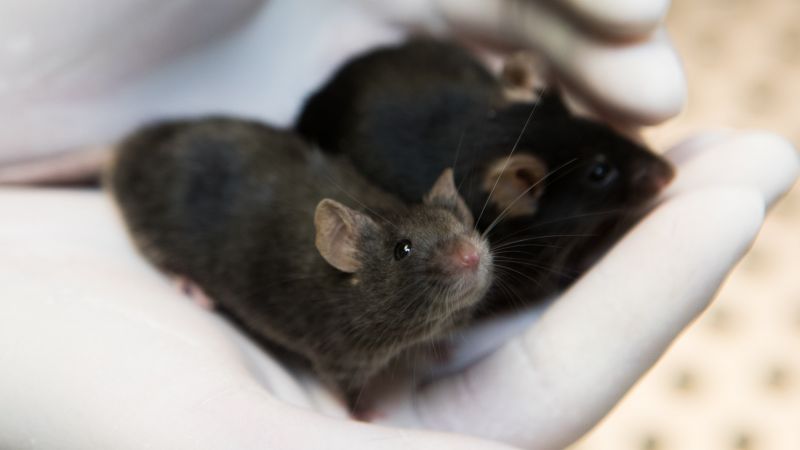
Building on decades of limb-regeneration research in animals, scientists have previously managed to partly regenerate rodent ear parts and small portions of digit tips in spiny mice (a type of mouse with naturally high regenerative powers) and in rabbits, demonstrating that mammals do have some capacity for regrowth. A recent study, published in Nature Communications in 2026, went a step further: restoring the bone, joints, ligaments, and tendons of an entire mouse digit. A two-stage treatment redirected the body's normal healing response away from scar formation and toward regrowth instead.
When most mammals are injured, the body typically responds with fibrosis. Fibroblasts – cells found in the skin – quickly seal the wound and form scar tissue. While this response helps prevent infection and further damage, it also shuts down the body's ability to rebuild what was lost. In animals that can regenerate, similar cells instead gather into a structure called a blastema, which acts as a foundation for new tissue growth.
Researchers from Texas A&M's College of Veterinary Medicine and Biomedical Sciences managed to reverse this healing process in mice, redirecting the behaviour of fibroblasts already present at the injury site, prompting them to form a blastema-like structure, and encouraging those cells to begin building new tissue.
From scarring to regrowth
Although the regrown tissues weren't a perfect replica of the originals, the approach could, in the near term, help reduce scarring and improve tissue repair after amputation. One of the study's most important findings is that mice already carried the capacity for regeneration, hidden within the body's normal healing machinery, waiting to be switched on under the right conditions. Notably, this regeneration didn't require adding stem cells from outside the body, an approach explored elsewhere in regenerative medicine.
This suggests regeneration may not be a completely lost trait in mammals after all. Instead, it may be a dormant ability that normally stays inactive during healing, which would change our expectations of what might eventually be possible in humans.
Boosting wound healing
The findings behind this limb-regeneration work in mice could have practical applications for healing wounds long before full-limb regeneration becomes possible in humans. Rather than focusing solely on replacing missing structures, this approach may help improve everyday healing outcomes by reducing scarring and enhancing tissue repair, while the bigger goal of full regeneration remains a work in progress.
Last edited: 2 September 2026 09:08