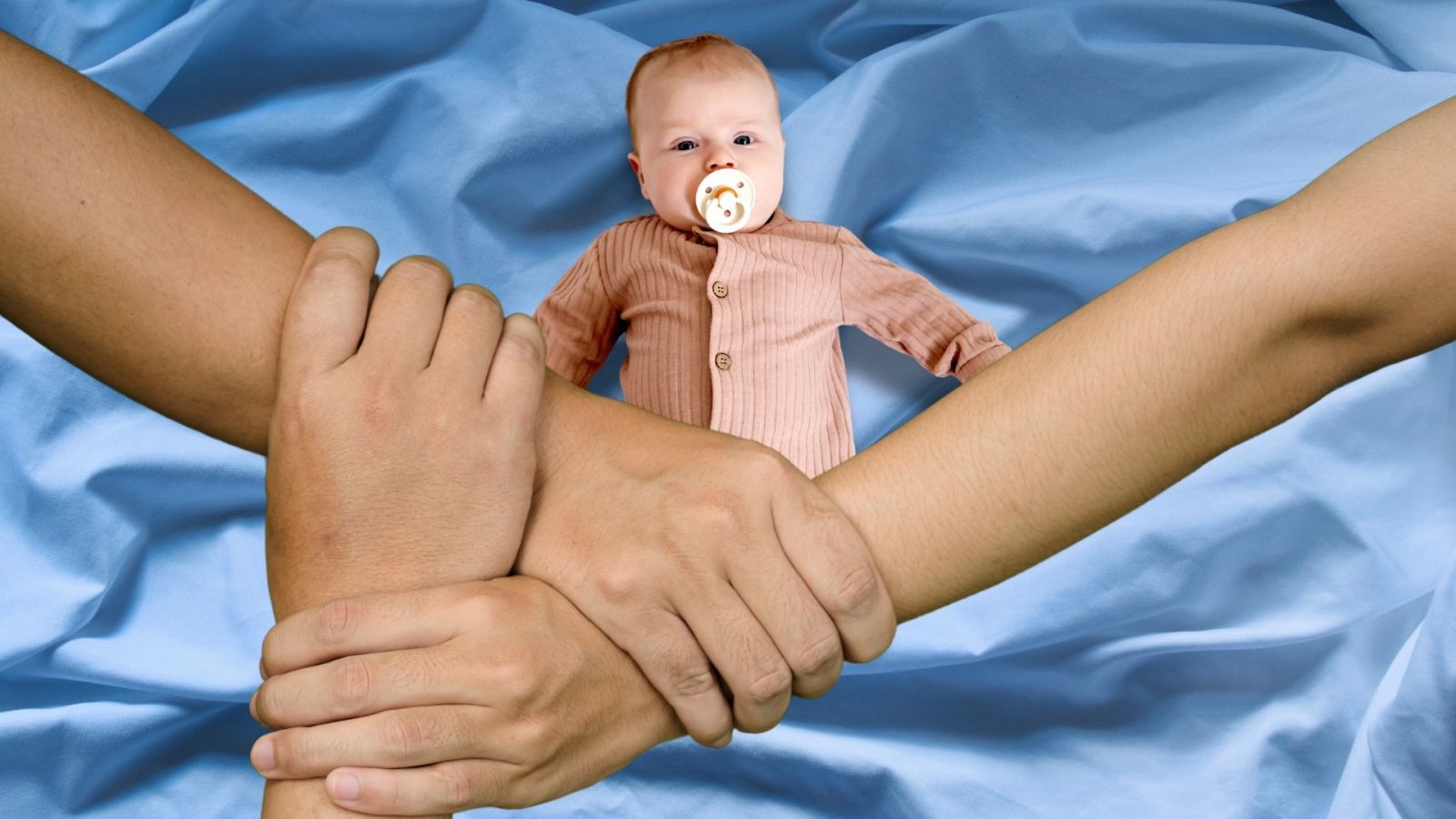
Ten years ago, the UK approved a pioneering reproductive technique meant to spare children from being born with rare and often fatal diseases caused by genetic mutations in the mitochondria of cells. Scientists have since reported eight healthy children born free from hereditary disease in the UK thanks to mitochondrial donations. This incredible advance, which has come to be known as “three-parent babies” was made possible by over 30 years of research in animals.
Mitochondrial disease
Mitochondria are unique and fascinating small structures in our cells. Descended from bacteria that formed a symbiotic relationship with ancestral animal and plant cells over one-and-a-half billion years ago, they provide the energy every cell needs to function.
Animal mitochondria have their own DNA consisting of 37 genes that are located separately from the DNA in the cell nucleus. Faults in these genes can cause mitochondrial dysfunction and disease, resulting in brain damage, muscle wasting or heart failure, with variable severity depending on the number of damaged mitochondria in one cell. For instance, mice with 40% or less mutation rates in their mitochondrial DNA do not express any symptoms. Levels close to 80% are thought to cause disease.
Inherited mitochondrial disorders affect as many as 4,000 children in the USA and 2,500 in the UK every year, and for almost all of them, treatment options are limited. One way to reduce transmission of these disorders is to screen embryos being prepared for IVF (in vitro fertilisation), a technique which was vastly improved thanks to studies in Rhesus macaques by Dr Mitalipov’s team at the Oregon National Primate Research Center in the US. However, despite improvements in technique, screening doesn’t always succeed, and so Dr Mitalipov began to investigate other ways to prevent the transmission of broken mitochondria, most notably the donation of healthy mitochondria. Mice and rhesus macaque monkeys made mitochondrial donation a reality.
Pre-clinical animal research leading up to mitochondrial donation
Unlike the DNA in the nucleus of cells (which combines one version of each gene from the father and one from the mother), mitochondrial DNA is passed down exclusively from the mother. It is located separately from the nuclear DNA and can be replaced without making any changes to the rest of the genome.
Mitochondrial donations resemble, in a way, an intracellular transplant. The nuclear DNA is removed from the egg of a woman with faulty mitochondria and is placed in the egg of a healthy donor from which the nucleus has been taken out, but where the mitochondrial DNA remains. The newly constructed egg contains the DNA of the original mother and (when fertilised) father, but the mitochondrial DNA of a second woman. This is where the somewhat clickbait-y headlines about “three-parent babies” come from. The reality is that any baby born from this constructed egg would have 50% of the father’s DNA, 49.9% of the mother’s DNA, and 0.1% of a donor woman’s mitochondrial DNA (which is only used to power the energy in cells).
After experiments in mice suggested that this process was technically feasible, Dr Mitalipov demonstrated in 2009 that the mitochondrial genome could be efficiently replaced in the egg cells of monkeys. Three rhesus monkey babies were born, and another subsequent to publication of the study, all healthy and developing normally. The technique was also tested using thawed rhesus macaque cells because egg cells used in IVF need to be frozen. The experiment was successful and resulted in the birth of a healthy monkey.
Mitochondrial donation to create three-parent babies
Further tests using human eggs cells showed promising results and finally, in 2015, UK policymakers gave the green light to use this pioneering technology for human babies. Earlier this year, the UK team that has been performing the technique reported that eight healthy, disease free babies had been born so far, allowing them to validate the effectiveness of mitochondrial replacement therapy or mitochondrial donation. However, questions still remain.
Five of the eight children had no detectable pathogenic variants in their mitochondrial DNA based on blood tests. However, 5%, 12% and 16% of faulty genetic variants were detected in the other three children, raising the possibility that faulty mitochondrial genes might outcompete healthy ones. This is known as mitochondrial DNA competition and has been observed in fruit flies. Researchers are optimistic but will continue tracking the children for several more years for any sign of mitochondrial diseases. The collection of long-term data, including multi-generational data, will remain critical.
Currently, only the United Kingdom and Australia allow clinical mitochondrial replacement therapy. These countries are leading the way so that women with faulty mitochondria everywhere may one day be able to have healthy, genetically related children.
Last edited: 24 February 2026 15:04